• Link to Facebook
  • Link to X
  • Link to Youtube
  • Link to Instagram
  • Link to LinkedIn
  • Link to Rss this site
  • Store
  • Donate
  • About
        • About Us

        • Cancer Nation is the oldest cancer survivor-led non-profit organization in America. We advocate for quality cancer care for all touched by cancer.

        • About NCCS

        • Our Mission
        • What is Advocacy?Learn about the different types of cancer advocacy, from personal advocacy to public interest advocacy.
        • Our HistoryRead how Cancer Nation’s leaders coined the term “cancer survivor,” and established the nation’s first survivor-led non-profit organization.
        • Our Team
        • Financial Information
        • Employment
        • Contact Us
        • Support Our Mission

        • Make A GiftSupport our mission of quality cancer care for all with a gift to Cancer Nation.
        • The 1986 ClubMake a monthly commitment to support Cancer Nation, empower cancer survivors, and advance public policy.
        • Fundraise for Cancer Nation
        • Ways to GiveLearn about other ways you can contribute to Cancer Nation such as planned giving, employer matches, shopping online, and more.
        • Partnerships
  • News
    • Cancer Nation News
    • Advocate SpotlightEach month, Cancer Nation highlights a cancer survivorship advocate, sharing their story and the work they do in their communities.
    • Policy CommentsRead Cancer Nation’s comments to Congress, HHS, and other federal policymakers in Washington, DC on proposed rules and legislation.
    • Issue StatementsRead Cancer Nation statements on pressing issues and developments in Washington affecting cancer survivors and their families.
  • Policy
        • Policy

        • Public policy is government action, in the form of legislation, regulation, funding, and other actions. Public policy affects people with cancer and the cancer care system in many ways.

        • Our Policy Priorities

        • Quality Cancer CareQuality cancer care is essential for patients. Learn how Cancer Nation and others define quality.
        • Access to CareCancer Nation believes cancer care and clinical trials should be affordable and accessible to everyone.
        • Health EquityThe cancer experience is not the same for everyone. Cancer Nation works on policy efforts to reduce disparities in outcomes.
        • Current Issues

        • Protecting Access to Medicaid for Cancer Survivors
        • Comprehensive Cancer Survivorship Act (CCSA)The CCSA is a large comprehensive bill introduced in Congress that aims to improve quality of care in all stages of a diagnosis.
        • Cancer Care Planning and Communications Act (CCPCA)CCPCA is a bill that would provide a billable Medicare service code for cancer care planning.
        • DIEP Flap AccessCancer Nation advocates for protection of access to DIEP Flap Breast Reconstruction Surgery for all breast cancer survivors.
        • Policy CommentsRead Cancer Nation’s comments to Congress, HHS, and other federal policymakers in Washington, DC on proposed rules and legislation.
        • Issue StatementsRead Cancer Nation statements on pressing issues and developments in Washington affecting cancer survivors and their families.
        • Quality Measurement Research
  • Get Involved
        • Get Involved

        • Whether you’re new to cancer advocacy or already have experience as an advocate, there are numerous ways you can get involved with Cancer Nation.

        • Join Cancer Nation

        • Cancer Nation AdvocatesA program that brings together individuals who care about cancer care to learn how policy shapes our health care system—and how we can improve it together.
        • Cancer Nation Leadership AcademyEmerging leaders improving cancer care in their communities.
        • Cancer Nation Corporate Council
        • Advocacy OpportunitiesThis page provides a list of upcoming events, webinars, conferences, and advocacy campaigns from Cancer Nation and other leading cancer organizations.
        • Connect with Us

        • Subscribe to Cancer Nation Updates
        • Follow Cancer Nation on Social Media
        • Survivor Stories
        • Cancerversary
        • Support Cancer Nation

        • Make A Gift
        • Fundraise for Cancer Nation
        • Ways to Give
        • The 1986 Club
  • Survivorship Survey
        • State of Survivorship Survey

        • Cancer Nation conducts an annual State of Survivorship Survey, in partnership with Edge Research, to explore the cancer patient and survivor journey. This study captures a range of perspectives to better understand how Cancer Nation can support its mission to advocate for quality cancer care for all.

        • Reports by Year

        • 2025 Survey Report
        • 2024 Survey Report
        • 2023 Survey ReportThe 2023 Survey explored the caregiver experience for the first time, and features new data on the effect of cancer treatment on employment.
        • 2022 Survey ReportThe 2022 Survey found significant disparities in cancer care that impact people of color, young adults, women, and those with metastatic cancer, at higher rates.
        • 2021 Survey ReportThe 2021 Survey demonstrated that when patients receive quality care, have excellent support, and have financial resources, they are more likely to have positive outcomes.
        • 2020 Survey ReportIn the 2020 Survey, survivors reported that their care team is not helpful at addressing some common side effects of their cancer such as fatigue, anxiety, and depression.
  • Survivorship Checklist
        • Cancer Survivorship Checklist

        • The Cancer Survivorship Checklist is designed to be a simple, straightforward tool patients and caregivers can use as a guide for information critical to their care wherever they are on the cancer care continuum.

        • Start Your Cancer Survivorship Checklist
        • Survivorship Checklist Guide for Clinicians
        • Resources for Cancer Survivors

        • Survivorship ResourcesA collection of resources that provide information about navigating the cancer journey.
        • Cancer RehabilitationA supportive health care service that helps improve a person’s functioning during and after cancer treatment.
        • Integrative OncologyA field that combines traditional cancer treatments with therapies that support a person’s natural healing ability.
        • Palliative CareSpecialized medical care for people living with a serious illness that provides relief from the symptoms and stress to improve their quality of life.
        • Cognitive HealingA resource to support cognitive functioning after cancer treatment. Includes cognitive training strategies and tools for both adults and children.
  • Resources
        • Resources

        • Cancer Nation provides a wide variety of resources for patients, caregivers, and health care professionals.

        • Resources for Survivors and Caregivers

        • Health Insurance & Open Enrollment
        • Cancer Survival ToolboxA free, award-winning audio program created by leading cancer organizations to help people better meet & understand the challenges of their illness.
        • Ina® The Intelligent Nutrition Assistant
        • Telehealth
        • Care Planning for Cancer Survivors
        • Remaining Hopeful
        • Self Advocacy
        • Talking With Your Doctor
        • Taking Charge of Your Care
        • Order Our Resources
        • Resources for Health Care Professionals

        • Tools For Care Providers
        • Telehealth Project
        • Survivorship Champions Webinars
        • Survivorship Checklist Guide for Clinicians
  • Events
    • 2026 Cancer Nation Summit
    • Igniting Hope Awards Reception
    • Ellen L. Stovall Award
      • 2025 Winners
      • Awardees
      • Nominations
      • Committees
    • Cancer Nation Webinars
    • Cancer Nation Policy Roundtable
      • Fall 2025
      • Spring 2025
      • Fall 2024
      • Spring 2024
      • Fall 2023
      • Spring 2023
  • 0

NCCS is now Cancer Nation. Find out more about our next chapter.    Join Us

Focus on the Care

NCCS Celebrates “Focus on the Care” Reception in Honor of Dr. Richard Pazdur and Ellen Goodman
October 22, 2015/in Cancer Nation News, Cancer News, Cancer Policy Blog Access to Care, Clinical Trials, Quality Cancer Care, Shared Decision-Making, Survivorship Care Cancer Nation News
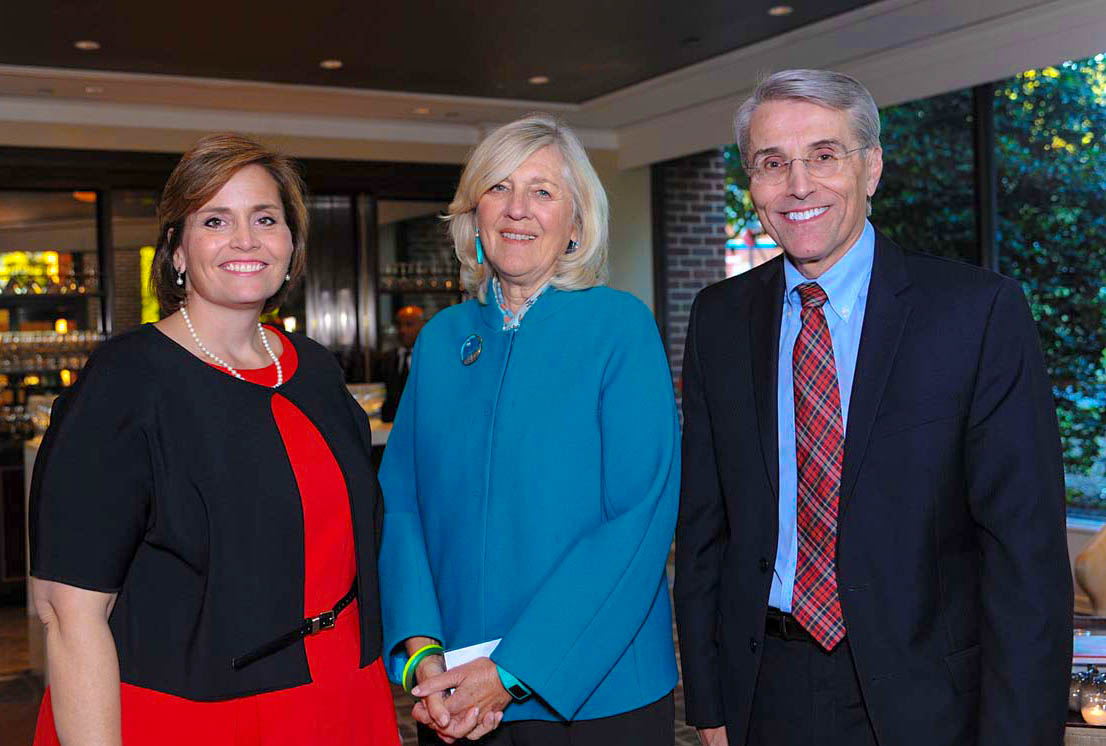
National Coalition for Cancer Survivorship hosts their Focus on the Care Awards reception on Wednesday, October 21, 2015, in Washington, DC. (Photos by Leslie E. Kossoff) Dr. Richard Pazdur Ellen Goodman Shelley Fuld Nasso

NCCS CEO Shelley Fuld Nasso with Ellen Goodman (2015 Recipient of the Jessie Gruman Award for Patient Engagement) and Dr. Richard Pazdur (Photos by Leslie E. Kossoff)

Last night survivors, advocates, researchers, innovators, and friends gathered at our 2015 Focus on the Care reception in celebration of two honorees who have used their unique talents to help the millions of people affected by cancer.  We are grateful for all who attended to show their support for Dr. Richard Pazdur and Ellen Goodman—two people who have made cancer care better for survivors and their families.

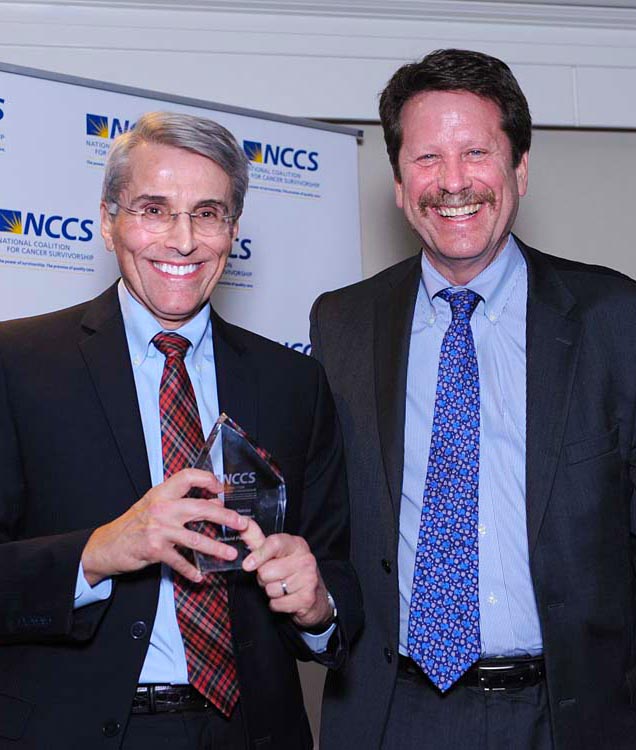
We were also pleased to have Dr. Robert Califf, the Food and Drug Administration (FDA) Deputy Commissioner for Medical Products and Tobacco and President Obama’s nominee for FDA Commissioner, present Dr. Pazdur with the NCCS Public Service Leadership Award. In his acceptance speech, Dr. Pazdur, the Director of the FDA’s Office of Hematology and Oncology Products, noted the urgent need for clinical trials that meet the needs of patients. Prior to the event, Dr. Pazdur and his wife, Mary Pazdur, sat down with us to discuss many issues in cancer care, including the importance of the physician/patient relationship, the collaboration of groups that have helped to advance cancer care, and the “patient cry.” The full video and transcript can be viewed below.
National Coalition for Cancer Survivorship hosts their Focus on the Care Awards reception on Wednesday, October 21, 2015, in Washington, DC. (Photos by Leslie E. Kossoff) Dr. Richard Pazdur Ellen Goodman Shelley Fuld Nasso

Dr. Robert Califf presents Dr. Richard Pazdur with the NCCS Public Service Leadership Award. (Photos by Leslie E. Kossoff)

This year also marked the inaugural presentation of the Jessie Gruman Award for Patient Engagement. For many years, we’ve admired Ellen Goodman, a Pulitzer Prize-winning columnist, author, and the co-founder of The Conversation Project, a widely-celebrated national public health campaign that works to change the way people talk about and prepare for their end-of-life care. Ms. Goodman has spent most of her life chronicling social change and its impact on American life. Her gift of story-telling has helped to shift the discourse surrounding important discussions about end-of-life choices and advance care planning. She spoke of the critical need to share our stories as our collective attitudes surrounding the experience of dying develop into a human experience. NCCS CEO Shelley Fuld Nasso presented Ms. Goodman with the Jessie Gruman Award, an honor named after a tireless advocate and the founder of the Center for Advancing Health.

We look forward to sharing more videos and photos in celebration of the honorees and our friend and colleague Jessie Gruman soon.


VIDEO TRANSCRIPT

Dr. Richard Pazdur: It’s a fascinating time to be in medical oncology. One of my only regrets that I tell people, I wish that I could be here for the next thirty years because I think that that’s going to be an even more fascinating period of time for the treatment of diseases. It’s an interesting phenomenon that we’ve had of looking at diseases where there simply were no other therapies and where we’re seeing multiple therapies being developed. We’re seeing major advances in our understanding of the immune system and how the body interacts with cancer and developing appropriate drugs. So that gives me pause to think for the next thirty years to think of what oncology will look like. I’m really kind of jealous of the people that are just entering the field or early in their career. I think that they have a fantastic career ahead of them.

“…We’re not the roadblock or the barrier or the challenge to get drugs approved. We’re here to protect the American public, to promote the health of the American public.”
There are a lot of distractions in medicine about the costs of the drugs, about how private practice is changing, how academic medicine is changing, but I think we have to take a look at the really big picture here and that is the patient and the physician and that relationship. And it is a very important relationship that I’ve always held very sacred and important in my life. As far as my vision for the FDA, when I came, and I think that’s an important thing to discuss, I saw the potential for the FDA. And, here again, it needed an external face. People had to understand what we’re doing at the FDA and I think through the cooperation and collaboration of patient groups, ASCO, AACR, ASH, the numerous interactions that we have, we’ve really put a different face on the FDA, a much more external face and it illustrates the importance of the work that we do here. I think it’s important for people to understand that we’re not the roadblock or the barrier or the challenge to get drugs approved. We’re here to protect the American public, to promote the health of the American public.

When Personal and Professional Lives Intersect

I always give the joke that our first date was over a bottle of Adriamycin in the exam room, which sounds somewhat peculiar, but that was the truth. It was not over a bottle of chardonnay, or whatever. But it gave us a common experience, and I look back to all of those early patients that were treated with Mary, and myself, and the people at Rush (Rush-Presbyterian St. Luke’s Medical Center) where we were working at that time in Chicago and it really was a special time in my life. I’ve enjoyed the partnership that I’ve had with Mary during those years. As many of you know, my life had been transformed over the past three years with my wife having ovarian cancer and this gives me a special perspective on the treatment of patients with cancer.

Mary Pazdur: I’ve always worked in oncology, even when I was an undergraduate nursing student and I was always drawn to oncology because it’s so many different diseases affecting so many body systems and developmentally along the continuum of life. The silver lining is that you learn a lot of existential lessons about living and dying when you’re almost too young to learn those things. But I think it has prepared me in advance because many times I would be in an exam room with a patient as a healthy healthcare provider wondering, “I wonder how I would cope with that situation. What would I do? What would I think?” So I’ve had the luxury of some rehearsal and very few people have that opportunity in their lifetime. And it’s made it, in some ways, easier, and respectful of that experience with those people and you see also the strength and the resiliency of the human spirit that comes through. I’ve learned a new-found respect for the caregiver, since he has had to become a caregiver in addition to the other hats that he wears. I’ve always understood the important role that each of us with cancer has in having someone who is helping them through. The patient usually is the center or the focus, and it’s very easy for the patient to forget that they wouldn’t be there if it weren’t for the other, besides the health care professionals, supporting them and helping them and being compassionate, but the people at home. The family.

“We have to understand that the clinical trials are here to serve the patients. The patients are not here to serve the clinical trials.”
Dr. Richard Pazdur: I would say that one thing that has, one major issue that I think that this whole experience has taught me is our underestimation of drug toxicity from the patient’s perspective. A physician simply doesn’t have that. A physician spends fifteen minutes, a half hour, perhaps an hour with a patient, they’re not there at two o’clock in the morning. They’re not there when they leave their wife at eight o’clock in the morning and she’s sitting on the couch because she’s fatigued, and when you come back at five o’clock, she’s still sitting on the couch, fatigued. That’s not a grade two toxicity. It’s really life-altering. And people have got to understand that. But I think one of the major things that you have always been interested in is maintaining quality of life and looking at what are the toxicities versus the benefit and having the perspective of knowing about the disease. I remember when we first got the diagnosis, three years ago, I was talking to a very good friend of mine who is a lawyer and I was telling him that having Mary have this disease and having worked with her with similar patients, et cetera, and having had patients throughout my professional career with this was like being in a book that you know. You know the entire story and how it’s going to end.

The Patient Cry

One of the things that I really emphasize is that, when we hear the “patient voice,” we really shouldn’t get lost in the tree, so to speak, in arguments of whether one should take time to progression or overall survival as the endpoint. We really should look at larger questions that affect oncology. And these are some of the projects that we’re looking at, at the FDA. For example, we’ve heard from almost all patients that they want clinical trials that work for them. They want eligibility criteria that are broadened, that represent the real world, that don’t exclude patients because they’ve had a prior malignancy or they are a poor performance status, or they have HIV infection. We want to look at that, and this is one of the projects that we have ongoing in the divisions, all three of the oncology divisions, the clinical divisions, looking at ways of broadening eligibility criteria. There are major issues that really need to be addressed in the clinical trials enterprise here and we really need to bring the patient voice. One of the things that I’ve thought about during this whole interaction in the past few years with bringing in the patients more to the FDA and hearing the whole FDA initiative of the patient voice, I sometimes wonder if it’s not a “patient voice,” but a “patient cry,” to really develop clinical trials that are more humanistic, that really address the needs of the patient. We have to understand that the clinical trials are here to serve the patients. The patients are not here to serve the clinical trials. So I think my goal was really to make us a partner in drug development and I think I accomplished that with the help of a fantastic group of people. And here again, I thank the organization (NCCS) for giving me this award, but it’s really not for me. This award is really for the people who work in oncology and I have been blessed to work with many talented people.


The views & opinions expressed in any guest post or video featured on our site are those of the guest author and do not necessarily reflect the opinions & views of the National Coalition for Cancer Survivorship. Read our blog and comment policies here.

Tags: cancer care, Cancer Survivorship, caregivers, clinical trials, FDA, nursing, patient first, quality, video post
Share this entry
  • Share on Facebook
  • Share on X
  • Share on WhatsApp
  • Share on LinkedIn
https://canceradvocacy.org/wp-content/uploads/Focus-on-the-Care1.jpg 515 1030 actualizedevs https://canceradvocacy.org/wp-content/uploads/CancerNation_Logo_Stacked_TwoColor.svg actualizedevs2015-10-22 18:00:192020-12-01 12:27:00NCCS Celebrates “Focus on the Care” Reception in Honor of Dr. Richard Pazdur and Ellen Goodman

Latest News

Group of researchers working in a lab

Cancer Nation Joins Amicus Brief in Suit Over Vaccine Recommendations

July 24, 2026
Last week, Cancer Nation joined leading patient advocacy and public health organizations in supporting an amicus (or friend-of-the-court)…
Read more
https://canceradvocacy.org/wp-content/uploads/Research-Group-Stock-Photo.jpg 600 1200 Elleni https://canceradvocacy.org/wp-content/uploads/CancerNation_Logo_Stacked_TwoColor.svg Elleni2026-07-24 14:30:482026-07-24 14:33:17Cancer Nation Joins Amicus Brief in Suit Over Vaccine Recommendations
a graphic with a text headline reading "Cancer Nation Announces New Leadership Academy Cohort", underneath are Headshots of all 12 2026 cancer Nation Ambassadors side-by-side

Meet the 2026 Cancer Nation Leadership Academy Ambassadors

July 15, 2026
We are proud to welcome the 2026 Cancer Nation Leadership Academy cohort. Following a competitive application process, 12 survivors,…
Read more
https://canceradvocacy.org/wp-content/uploads/Leadership-Academy-Announcement-1200-600-2.jpg 600 1200 Elleni https://canceradvocacy.org/wp-content/uploads/CancerNation_Logo_Stacked_TwoColor.svg Elleni2026-07-15 15:41:172026-07-15 16:53:13Meet the 2026 Cancer Nation Leadership Academy Ambassadors
Eshan Vishwakarma Advocate Spotlight Banner

Saved by a Trial, Building the Fix: Eshan Vishwakarma’s Path from Patient to Founder

July 9, 2026
Diagnosed with neuroblastoma at three, Eshan Vishwakarma now builds tools to fix cancer care navigation. A Cancer Nation Advocate shares his story and why he is passionate about access and survivorship.
Read more
https://canceradvocacy.org/wp-content/uploads/Eshan-Vishwakarma_-Advocate-Spotlight-Blog-Banner.png 600 1200 Elleni https://canceradvocacy.org/wp-content/uploads/CancerNation_Logo_Stacked_TwoColor.svg Elleni2026-07-09 10:29:472026-07-09 10:32:09Saved by a Trial, Building the Fix: Eshan Vishwakarma’s Path from Patient to Founder

Take Action

Link to: Survivorship Champions

Get Involved in Research

Cancer Nation conducts an annual Survivorship Survey to explore how patients and survivors are living with, through, and beyond cancer. This study captures a range of perspectives to better understand how Cancer Nation can support its mission to advocate for quality cancer care for all.

Learn More and Request Data Here »
Link to: Cancer Nation Advocates

Join Cancer Nation Advocates

Cancer Nation Advocates is a a program that brings together individuals who care about cancer care to learn how policy shapes our health care system—and how we can improve it together

Learn More and Join »
Link to: Survivor Stories

Share Your Story

Cancer Nation represents the millions of Americans who share a common experience – living with, through and beyond a cancer diagnosis. By sharing your story of how you have been touched by cancer, you are supporting the national cancer survivorship movement.

Share Your Story »
  • About
    • Our Mission
    • What is Advocacy?
    • Our History
    • Our Team
    • Financial Information
    • Employment
    • Contact Us
    • Make A Gift
    • The 1986 Club
    • Fundraise for Cancer Nation
    • Ways to Give
    • Partnerships
  • News
    • Cancer Nation News
    • Advocate Spotlight
    • Policy Comments
    • Issue Statements
  • Policy
    • Quality Cancer Care
    • Access to Care
    • Health Equity
    • Protecting Access to Medicaid for Cancer Survivors
    • Comprehensive Cancer Survivorship Act (CCSA)
    • Cancer Care Planning and Communications Act (CCPCA)
    • DIEP Flap Access
    • Policy Comments
    • Issue Statements
    • Quality Measurement Research
  • Get Involved
    • Cancer Nation Advocates
    • Cancer Nation Leadership Academy
    • Cancer Nation Corporate Council
    • Advocacy Opportunities
    • Subscribe to Cancer Nation Updates
    • Follow Cancer Nation on Social Media
    • Survivor Stories
    • Cancerversary
    • Make A Gift
    • The 1986 Club
    • Fundraise for Cancer Nation
    • Ways to Give
  • Survivorship Survey
    • 2025 Survey Report
    • 2024 Survey Report
    • 2023 Survey Report
    • 2022 Survey Report
    • 2021 Survey Report
    • 2020 Survey Report
  • Survivorship Checklist
    • Start Your Cancer Survivorship Checklist
    • Survivorship Resources
    • Cancer Rehabilitation
    • Integrative Oncology
    • Palliative Care
    • Cognitive Healing
    • Survivorship Checklist Guide for Clinicians
  • Resources
    • Cancer Survival Toolbox
    • Telehealth
    • Health Insurance & Open Enrollment
    • Care Planning for Cancer Survivors
    • Ina® The Intelligent Nutrition Assistant
    • Remaining Hopeful
    • Self Advocacy
    • Talking With Your Doctor
    • Taking Charge of Your Care
    • Order Our Resources
    • Tools For Care Providers
    • Telehealth Project
    • Survivorship Champions Webinars
    • Survivorship Checklist Guide for Clinicians
  • Events
    • 2026 Cancer Nation Summit
    • Igniting Hope Awards Reception
    • Ellen L. Stovall Award
      • 2025 Winners
      • Awardees
      • Nominations
      • Committees
    • Cancer Nation Webinars
    • Cancer Nation Policy Roundtable
      • Fall 2025
      • Spring 2025
      • Fall 2024
      • Spring 2024
      • Fall 2023
      • Spring 2023
  • Search
  • Cart

Charity Navigator Four-Star Rating

Cancer Nation Logo

Cancer Nation
8455 Colesville Road  |  Suite 1025 | Silver Spring, MD 20910
info@canceradvocacy.org | (877) NCCS-YES
Privacy Policy  |  Terms and Conditions

Copyright © 1995-2026 by Cancer Nation. National Coalition for Cancer Survivorship, NCCS, Cancer Survival Toolbox, Cancerversary, and related Logos are registered in the United States as trademarks of Cancer Nation (formerly the National Coalition for Cancer Survivorship).

Link to: Twenty Years Later Blog Series: Introducing the Tenth Principle of the Imperatives for Quality Cancer Care Link to: Twenty Years Later Blog Series: Introducing the Tenth Principle of the Imperatives for Quality Cancer Care Twenty Years Later Blog Series: Introducing the Tenth Principle of the Imperatives...20years Link to: WCOE: Deciding About Dying, Discourse Surrounding New Mammogram Guidelines, Biden’s Commitment to Helping People with Cancer, and Breast Cancer in Developing World Link to: WCOE: Deciding About Dying, Discourse Surrounding New Mammogram Guidelines, Biden’s Commitment to Helping People with Cancer, and Breast Cancer in Developing World NCCS Starburst ThumbnailWCOE: Deciding About Dying, Discourse Surrounding New Mammogram Guidelines,...
Scroll to top Scroll to top Scroll to top

This website uses cookies to improve user experience. By continuing to use this site, you agree to our Privacy Policy. Learn More.

Get Updates From Cancer Nation

Be the first to hear about cancer policy and survivorship issues! Subscribe and receive the twice-monthly Cancer Nation News, invites to webinars and events, and more.

  • This field is for validation purposes and should be left unchanged.

Connect With Us

Twitter     Facebook     Instagram     LinkedIn     YouTube

Harmar Brereton, MD

Founder
Northeast Regional Cancer Institute


“Perhaps one of the most impactful collaborations in Dr. Brereton’s extraordinary career remains his early work and long friendship with Ellen Stovall. Through him, and in turn through the thousands of lives he has touched, Ellen’s work continues, and her mission lives on.”

—Karen M. Saunders
President, Northeast Regional Cancer Institute