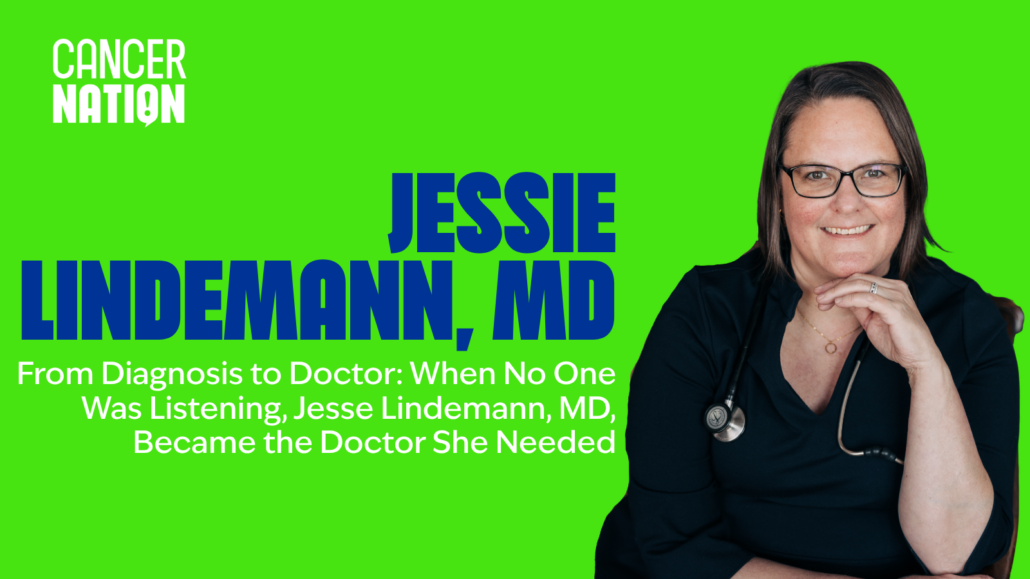
From Diagnosis to Doctor: When No One Was Listening, Jesse Lindemann, MD, Became the Doctor She Needed
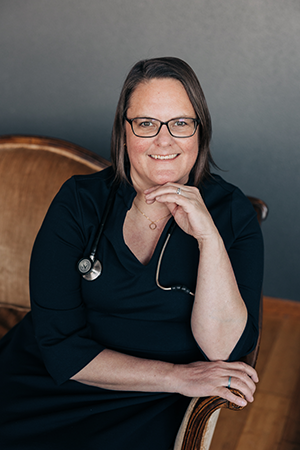 Jessie had built her early career in chemistry. She was working toward a graduate degree in the field when her health began to decline in ways that were difficult to name: persistent fatigue, unexplained rashes, depression without a clear source. She kept seeing doctors. She kept leaving without answers. And it kept feeling like the problem was hers to prove, not theirs to find.
After her gallbladder was removed, the abdominal pain didn’t go away. It got worse. She started losing weight. Finally, a GI specialist at the Mayo Clinic in Rochester ordered a series of tests, and it was a chest X-ray that finally showed something: a large mass. A CT scan and biopsy confirmed it. Jessie was diagnosed with nodular sclerosing Hodgkin lymphoma, stage 3a.
Jessie’s Story
She began six months of ABVD chemotherapy, every two weeks. Chemotherapy is hard to describe to someone who hasn’t been through it, and Jessie doesn’t soften it. By month four, the cumulative weight of treatment, the physical toll, the uncertainty, the isolation, had become almost unbearable. She reached a point where she didn’t know what she wanted, only that she wanted it to stop. She has described wanting to quit chemotherapy, and something beyond that, a desire for the whole situation to simply cease.
In that moment, she made a deal with herself. If she finished treatment, she would go back to school to become a physician. She wanted to understand the system that had failed her, and to become the kind of physician who would actually listen.
Chemotherapy was followed by three weeks of radiation. The cancer shrank.
And then she kept her promise.
Medical school was its own undertaking: years of training, residency, the long process of becoming the kind of physician she had needed and hadn’t found. She spent seven years working within a large health care system, and another year and a half at a community health center. Inside that larger system, she tried to build what she knew survivors needed: a survivorship-focused primary care clinic. She ran into too many obstacles to make it happen.
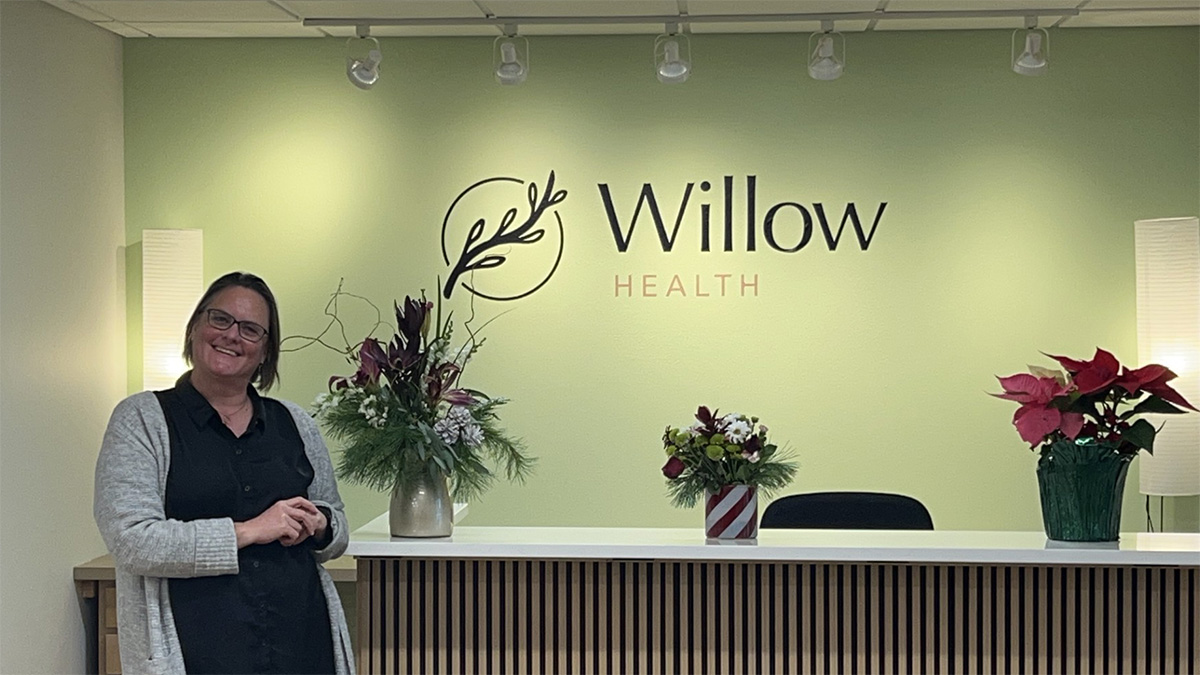
So she built her own practice instead, in North Dakota, from the ground up. She is the doctor and the billing manager, the employer and the administrator, the person who makes the whole thing run. Solo practice ownership is its own endurance test, and she has been passing it while also raising a family and building a nonprofit.
She did all of that. She also never forgot what it felt like to be the patient in the room who wasn’t being heard.
The Turning Point
About ten years after treatment, her oncologist formally discharged her from care. And that’s when another kind of difficulty began. There was no survivorship program. No plan for what came next. No one to tell her which long-term effects to watch for, which screenings to prioritize, or how to explain any of it to her primary care doctor. She was either going to figure it out herself, or teach her own physicians as she went.
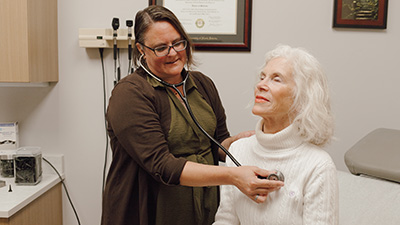 Jessie was a doctor by then. She understood medicine. And she was still lost. That is the thing about survivorship care in this country: knowing how the system works does not protect you from the gaps in it.
“The way I was feeling was OK, and it was normal. I had so many emotions during chemotherapy that weren’t really dealt with.”
That is what she wishes someone had told her at 28. It is also the message she now carries into her practice, her advocacy, and the survivorship education she is building for her state.
The Advocacy Work
Jessie serves as an ambassador with Cancer Nation’s Leadership Academy, and she is channeling what she lived through into something concrete.

She founded the North Dakota Cancer Survivorship Foundation, with a vision to create a community survivorship center that brings together primary care, physical and occupational therapy, mental health services, and financial support under one roof. She is currently pursuing grant funding to bring survivorship education to North Dakotans statewide.
Her work connects directly to Cancer Nation’s core policy priorities. She lives the gap in Survivorship Care Plans every day: as a physician who was herself discharged from oncology without a plan, and as a primary care doctor whose cancer survivor patients arrive without one. She understands Whole Person Cancer Care not as a policy abstraction but as the thing that was missing from her own treatment, the emotional support, the honest conversations, the acknowledgment that surviving is its own medical and human challenge.
She is equally plain about what needs to change structurally. As a solo practice owner in a rural state, she sees the collision of survivorship and inadequate insurance coverage every day, and the impact it has on her patients and on herself. Her position on it is unambiguous: “Health insurance should be a utility.”
What’s Next
Jessie’s advocacy is, by her own account, still becoming, but the foundation under all of it is something she earned slowly, over 23 years of survivorship, of practicing medicine, of watching patients arrive without care plans and leave without enough support. The survivorship center is not yet built. The grant is not yet funded. But the foundation is there, rooted in a specific kind of knowing that only comes from having been the survivor who needed what didn’t exist.
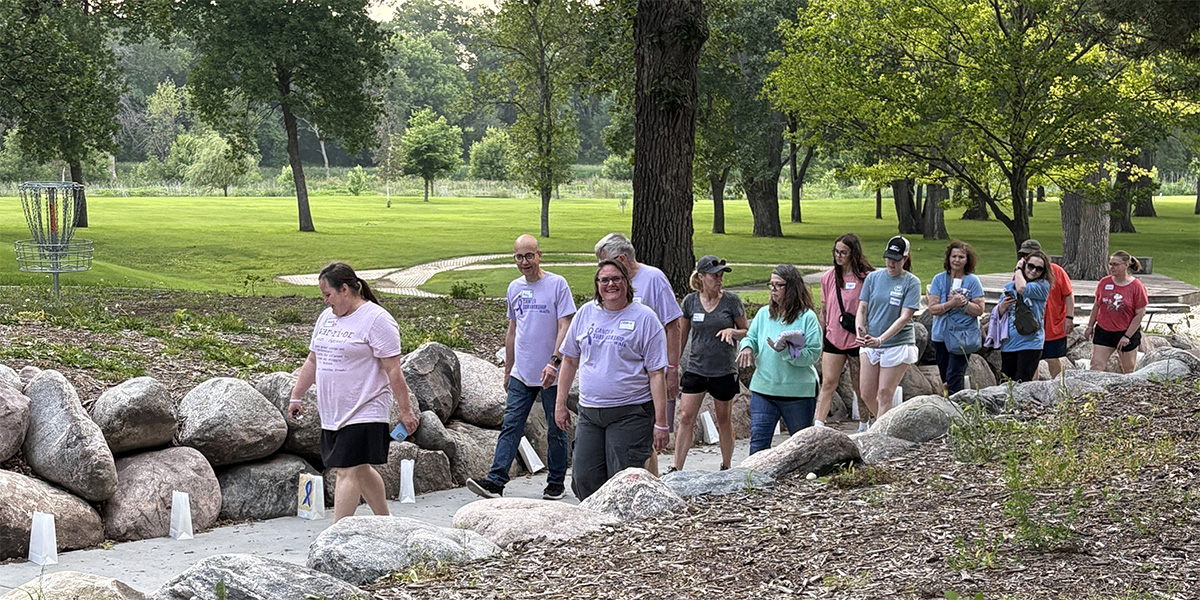
What she wants other survivors to know is not complicated: what you are feeling is normal. It is correct. Whatever it is. And there are people working to make sure you don’t have to find that out alone.
Want to get involved in cancer advocacy?
Learn more about Cancer Nation Advocates and join for free. »