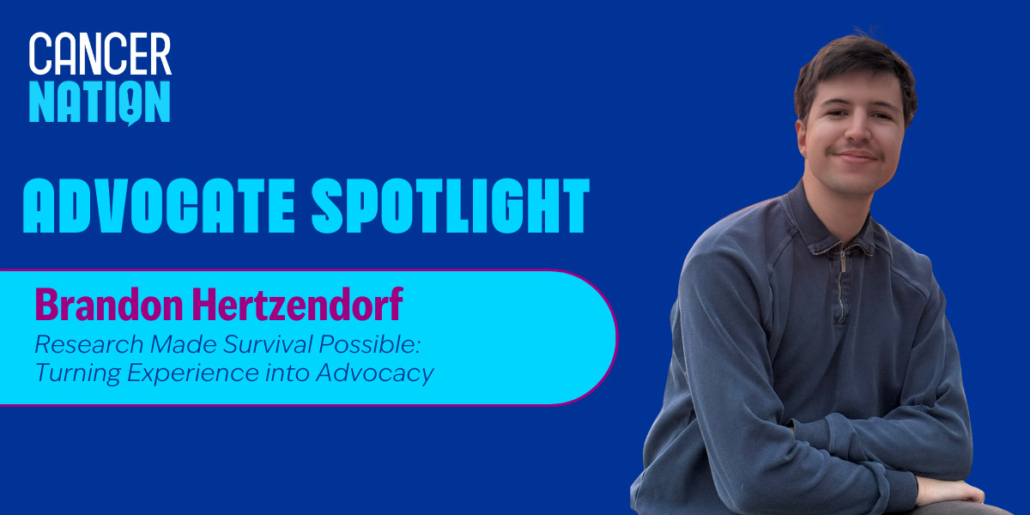
Research Made Survival Possible: Brandon Hertzendorf on Turning Experience into Advocacy
Cancer Nation Advocates Spotlight: Brandon Hertzendorf
A Life Shaped by Experience, Research, and the Need for Better Care
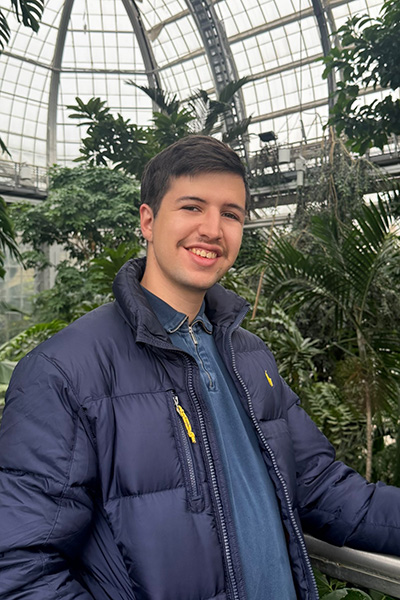 Brandon Hertzendorf’s path to advocacy sits at the intersection of lived experience, research, and a deep belief that cancer care can and must be better. Born and raised in South Florida, Brandon describes his childhood as fairly typical. That changed during high school, when a series of unexplained symptoms slowly revealed something far more serious. What followed shaped not only his life, but the work he now feels called to do.
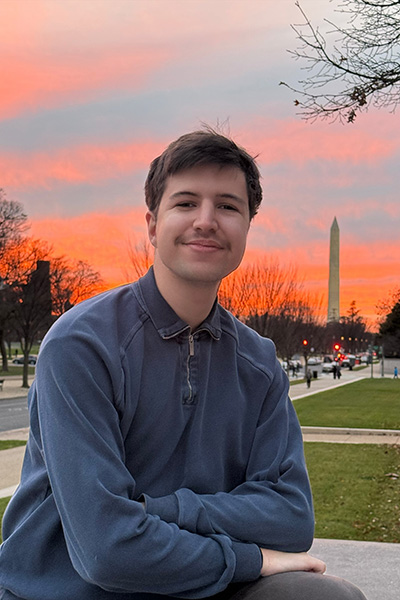
Today, Brandon works in Washington, DC at the National Institutes of Health, conducting social and behavioral health research. He holds a bachelor’s degree in psychology from the University of Florida and is on the path to becoming a psycho-oncologist. His story reflects why research and whole person care matter.
When Symptoms Became Something More
Brandon’s connection to cancer began long before he had the language to describe it. Migraines that once came monthly became constant. He began losing hearing in his left ear. A trip to the emergency room set off a chain reaction of scans, opinions, and diagnoses. What doctors initially believed was a benign tumor turned out to be something far rarer: a skull-based chondrosarcoma. Brandon was just 15 years old.
The rarity of his diagnosis placed Brandon in unfamiliar territory. He was treated in adult hospitals and navigating decisions that even seasoned clinicians debated. One doctor described him as a “unicorn of unicorns,” underscoring just how uncommon his case was. Ultimately, Brandon underwent a 17-hour surgery at the University of Miami, followed by 35 rounds of proton and photon beam radiation at Massachusetts General Hospital.
Navigating a System Without a Playbook
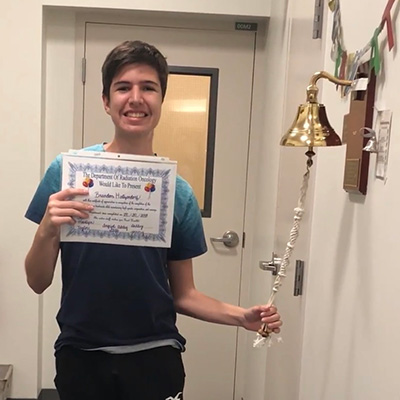
Brandon, age 15, “rings the bell” after finishing treatment.
What stands out most when Brandon reflects on that period is how overwhelming cancer care can be. “Cancer care is like a game,” he says, “not because it’s trivial, but because the rules are unclear, the stakes are high, and every decision can change the outcome.” Each specialist offered a different perspective. Treatment timelines shifted. Risks were weighed without certainty. His family responded the only way they could: by becoming expert organizers of information by carrying binders filled with records, medications, and notes.
From Patient to Researcher
That experience planted the seeds for Brandon’s future work. As a psychology student, and later through pediatric asthma research, he became increasingly interested in health psychology, specifically how people with chronic illness navigate complex systems and cope with long-term effects. Cancer, he learned, doesn’t end when treatment does. Survivorship brings its own challenges, many of which go unaddressed. While Brandon is grateful for the medical care that saved his life, he is clear about what was missing. Psychosocial support was inconsistent. The emotional weight of treatment, especially for a teenager, was largely unaddressed. And while he didn’t fully understand the financial toll at the time, he knew the burden on his family was significant.
Why Advocacy Became Personal
For Brandon, advocacy became inevitable. During his treatment, his mother turned to online support groups to gather information and connect with other families facing similar diagnoses. Through those communities, Brandon saw just how uneven cancer care can be like how geography, access, and resources can make the journey easier for some and far harder for others. Equity, he realized, wasn’t abstract. It was personal.
Moving to Washington, DC sharpened that realization. Being in the nation’s capital made the connection between policy and care impossible to ignore. “Why not put my best foot forward?” he thought. Advocacy wasn’t just something he wanted to do, it felt like something he was meant to do.
Finding a Home at Cancer Nation and Discovering the Power of Collective Voice
Brandon’s introduction to Cancer Nation came through his professional network, but the alignment was immediate. Cancer survivorship, policy, and research, three threads that had shaped his life, came together in one place. Cancer Nation became a natural home.
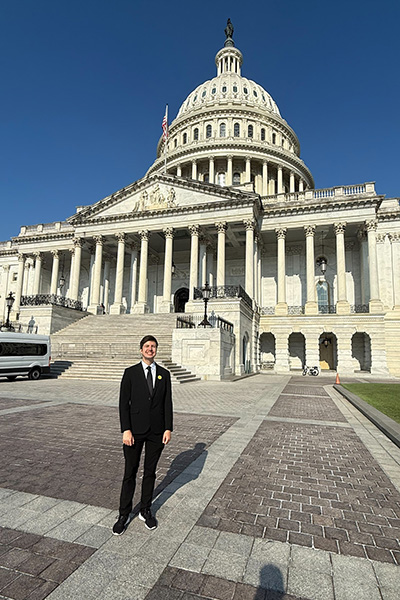
Through Cancer Nation, Brandon has participated in webinars, community conversations, and the 2025 Cancer Policy and Advocacy Team Symposium. For him, the experience went beyond learning policy details. Standing on Capitol Hill and sharing stories, his own and those of others, shifted how he saw himself.
“I didn’t realize how powerful a story could be,” Brandon says. Speaking out loud about an experience he had long normalized helped him see his own strength. Being surrounded by others who understood, even if their diagnoses were different, created a sense of connection he hadn’t felt before.
Research Saved His Life—and Advocacy Keeps It Moving Forward
That collective power is what Brandon believes makes advocacy effective. And when it comes to cancer research, the impact is undeniable. Treatments for skull-based chondrosarcoma have improved dramatically in the last 15 years because of sustained research and innovation. Brandon is direct about what that means: had he been diagnosed a decade earlier, his outcome might have been very different.
That reality is what he carried with him to meetings with lawmakers. Cancer research funding isn’t theoretical—it saves lives. It improves outcomes. It gives people a future. Cutting funding, Brandon argues, isn’t just a budget decision. It’s a decision that shapes who gets to survive and how well.
Using Our Voices to Shape Better Care
Brandon’s advocacy closely aligns with Cancer Nation’s policy priorities, reflecting a shared belief that better policy leads to better cancer care. Follow-up care, preventive services, and coordinated survivorship plans are too often overlooked once treatment ends. Yet long-term side effects, mental health needs, and chronic conditions remain. Survivors deserve care that doesn’t disappear when treatment does.
When Brandon talks about advocacy, he doesn’t frame it as expertise reserved for a few. Advocacy, to him, is speaking honestly about what you’ve seen and experienced and refusing to stay silent when systems fall short. It’s leaving your comfort zone and trusting that your voice matters.
His message to policymakers is simple: listen to patients. People living with, through, and beyond cancer understand the system in ways no report ever could. Their experiences should guide decisions about research funding, care delivery, and survivorship policy.
The Care We Deserve and the Power to Demand It
Brandon sees himself as one voice among many and together, those voices are powerful. “Cancer Nation brings people with different backgrounds and stories together around a shared demand: better care,” he says. Care that sees the whole person. Care that lasts beyond treatment. Care grounded in research and shaped by lived experience.
“We are Cancer Nation. And we are here to be heard,” Brandon says. For him, those words are a call to action. Be loud. Be persistent. And never stop pushing for the research, policies, and care that makes survival and thriving possible.
Learn more about Cancer Nation’s CPAT program for advocates and join for free.