Outliving the Odds, Rewriting the Path: Tom Warren’s Story of Survivorship and Advocacy
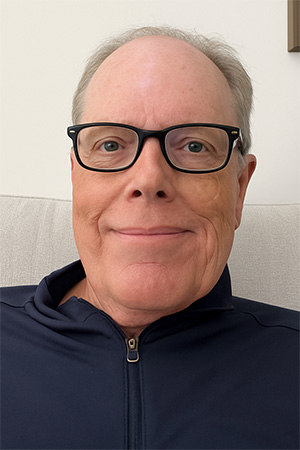 Advocate Spotlight: Tom Warren
In January 2019, Tom Warren’s life changed in a matter of weeks.
At 63, he was still working, still planning for the years ahead. Then a small mark on the side of his nose, first noticed by his spouse, Janet, led to a diagnosis that would upend everything: angiosarcoma, a rare and aggressive cancer with an average survival rate of just three years.
Within days of his diagnosis, his care moved at a pace few are prepared for. What followed wasn’t a single moment of crisis. It was years of treatment, recovery, and adaptation. By the end of that month, he underwent a 12-hour surgery to remove a five-centimeter tumor and begin reconstructing his face. Then, nearly 30 rounds of chemotherapy, 50 rounds of proton therapy, and multiple surgeries to address complications.
And in 2022, the loss of his left eye.
Today, Tom has no evidence of disease. “I’m a cancer survivor, something that, statistically, I was never expected to say six years after my diagnosis,” Tom shares. But as so many in our community know, survivorship is not a finish line, but a new reality, and one that brings its own set of challenges, questions, and unknowns.
“When you outlive your prognosis, you enter a space with few roadmaps,” he said. “The long-term effects of treatment don’t disappear; in many ways, they become part of your daily life.”
Tom knows that reality firsthand, living with lasting side effects from treatment, like fibrosis, neuropathy, and something harder to measure: the loss of identity. Tom shared that changes to his appearance mean people don’t always recognize him, and the career he once held, and the purpose it gave him, is no longer part of his daily life.
And yet, his story is not defined by what was lost. It is shaped by what came next.
Finding Purpose in the Aftermath
For Tom, survivorship became not just something to navigate, but something to make sense of.
He credits his spouse, children, grandchildren, friends, and community as essential to getting through the hardest moments. Meals showed up. Rides were arranged. People sat with him when there wasn’t anything to fix. It was steady, everyday support, the kind that carries you when you don’t have much left to give.
That experience stayed with him. Not just the care he received, but what it meant to be supported in a moment when everything had changed.
“That experience led me into advocacy,” he said. “Which has been a journey, one where I am still finding my footing.”
Tom began with A Fresh Chapter, first as a participant learning to advocate for himself, and later mentoring others in the program. It was a shift into the role of advocate, not all at once, but enough to open a door.
“That experience helped me feel valued again at a time when I was searching for a renewed sense of purpose.” Advocacy didn’t arrive as a clear role or identity. It built over time, through conversation, through connection, through showing up for others who were trying to find their way, too.
A Place to Be Heard
Through that community, Tom was introduced to Cancer Nation.
What started as a connection became an opportunity to share his story, to speak on behalf of other survivors, and to step into a new kind of leadership.
“Shelley and her team are doing meaningful, impactful work, and they’ve given me a space to begin building a new identity,” he shared.
While Tom is quick to say he’s still figuring out where he fits, his presence reflects something deeper about what advocacy really is and who it belongs to.
“The advocacy space includes many highly credentialed individuals from fields like law, medicine, insurance, and education,” he said. “My background is as a business leader, and I’m working to understand how I can best use that experience to serve the community I’m now part of.”
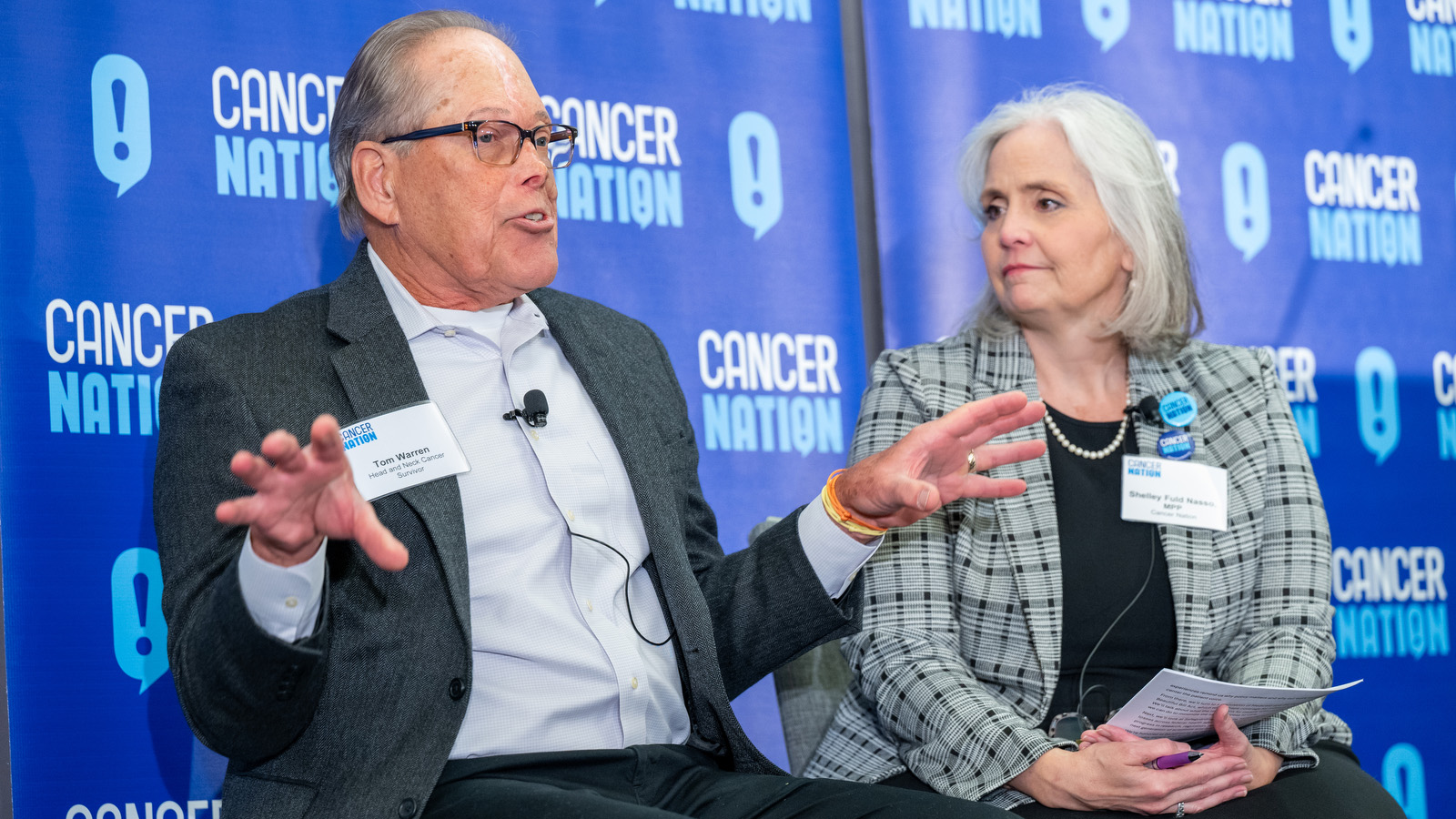
Tom Warren talks with Cancer Nation CEO Shelley Fuld Nasso at the Fall 2025 Cancer Nation Policy Roundtable (Photo by Leslie Kossoff/LK Photos)
Defining Advocacy
Ask Tom what advocacy means, and his answer doesn’t start with policy. It starts with the individual.
“Advocacy begins with supporting yourself; learning to speak up, ask questions, and take an active role in your care,” he said.
From there, it grows.
It becomes sharing knowledge. Supporting others. Helping someone else feel less alone in a system that often leaves people to figure things out on their own.
This matters. Because we know from our 2025 Survivorship Survey that too many survivors are navigating care without the support they need—emotionally, financially, and practically. Many feel unprepared for what comes after treatment. Many are still searching for answers.
Tom’s perspective speaks directly to that gap.
“What we learn and what we share matters,” he said. “It has the power to help those who come after us, people who will need guidance, understanding, and a voice.”
This is how change happens. Not just through systems, but through people willing to show up and speak.
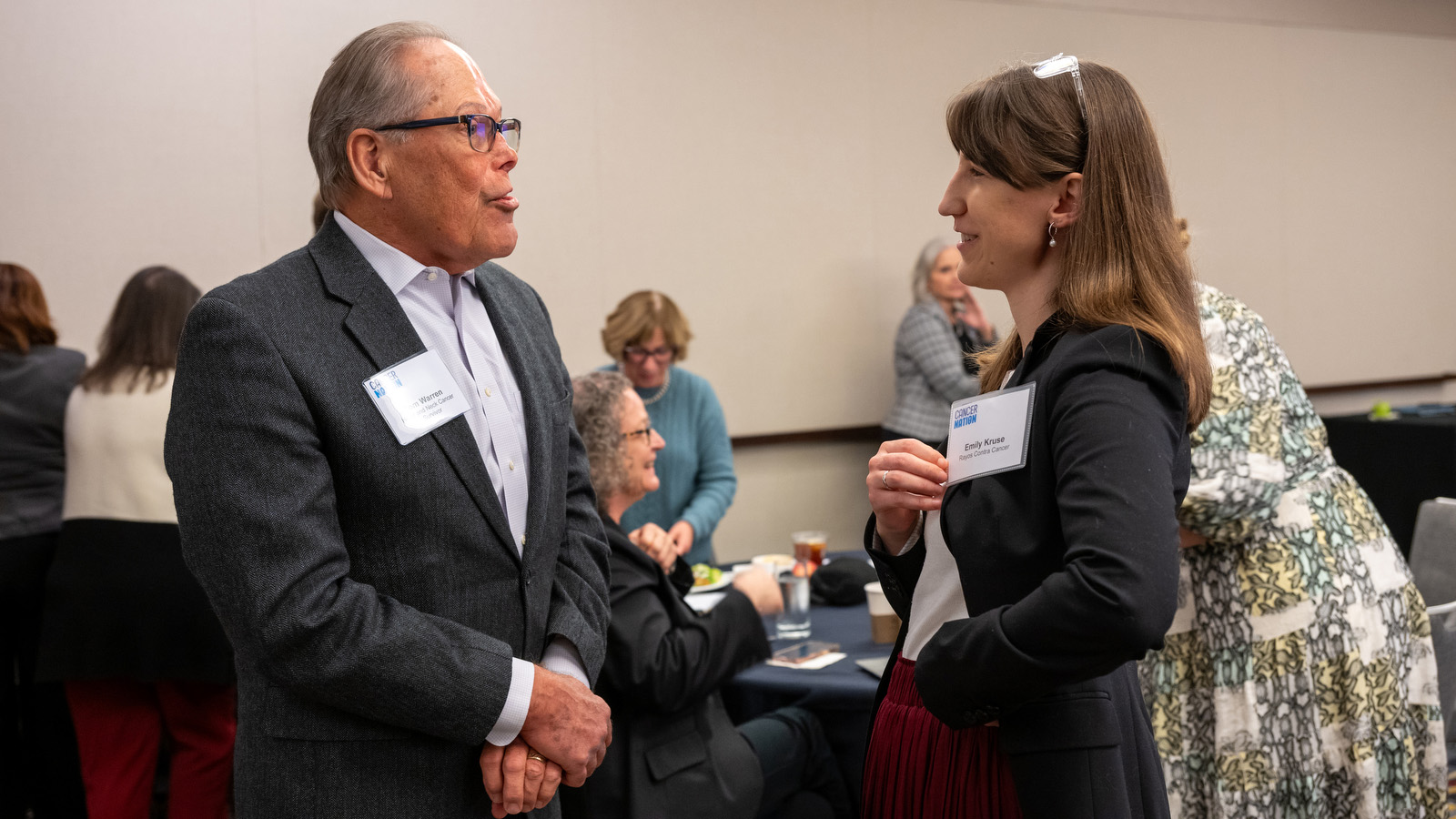
Tom’s story is a reminder that advocacy is not reserved for experts. It is built by people with lived experience—people willing to turn what they’ve been through into something that helps others.
“Anyone who has been on the cancer path has something valuable to offer,” he said.
And for those shaping policy and care systems, his message is just as clear: listen.
“At the center of this work is something essential: listening to patients,” Tom shared. “Hearing directly from those who have lived through cancer is critical to shaping what comes next and ensuring that advocacy efforts truly reflect the needs of the community.”
We couldn’t agree more.
Because a cure for care doesn’t happen in theory. It happens when real experiences shape real decisions, and when the voices of survivors are not just included but prioritized.
Living Forward
Today, Tom’s life looks different than he once imagined.
He spends his time fishing, golfing, hiking, and most importantly, being present with his family.
There is joy in that. There is meaning in that.
But there is also something else: a recognition that survivorship is not the end of the story.
“I may be an outlier in terms of survival,” he said, “but my experience highlights something universal: surviving cancer is not the end of the story. It is the beginning of a new one, one that requires resilience, adaptation, and, above all, connection.”
Want to get involved in cancer advocacy?
Learn more about Cancer Nation Advocates and join for free. »