
 https://canceradvocacy.org/wp-content/uploads/2012/12/NCCS_Starburst_Thumbnail.jpg
125
125
actualizedevs
https://canceradvocacy.org/wp-content/uploads/CancerNation_Logo_40Yrs_Stacked_TwoColor-scaled.png
actualizedevs2015-12-18 12:09:022015-12-18 12:09:02WCOE: Current Status of State Medicaid Expansion, Diversity of Clinical Trials, ACA Enrollment Deadline Extended
https://canceradvocacy.org/wp-content/uploads/2012/12/NCCS_Starburst_Thumbnail.jpg
125
125
actualizedevs
https://canceradvocacy.org/wp-content/uploads/CancerNation_Logo_40Yrs_Stacked_TwoColor-scaled.png
actualizedevs2015-12-18 12:09:022015-12-18 12:09:02WCOE: Current Status of State Medicaid Expansion, Diversity of Clinical Trials, ACA Enrollment Deadline ExtendedAccess to Care
Access to quality, affordable cancer care is essential for anyone with a cancer diagnosis. Access includes adequate health insurance that covers needed treatments without leaving people with cancer to suffer “financial toxicity.” People with cancer also need the ability to participate in a clinical trial, if it represents a potential treatment option.
Prior to the Affordable Care Act (ACA), cancer survivors were at the mercy of the health care system, often forced to pay exorbitant premiums or simply denied coverage altogether. Today, America’s 18.1 million cancer survivors benefit from the ACA’s patient protections that provide them with quality, affordable, and accessible health care coverage. Through the ACA, cancer patients and survivors can now purchase insurance through Healthcare.gov and state insurance exchanges. The ACA has afforded protections related to out-of-pocket expenses, lifetime caps, and pre-existing conditions.
Cancer Nation believes in the following principles for access to care:
- Individuals with pre-existing conditions must not be denied coverage or charged higher premiums.
- Plans must cover all essential health care needs.
- Adequate financial assistance must be provided to ensure people with low and moderate incomes can purchase health insurance.
- Insurers must not discriminate against older Americans, who are disproportionately impacted by cancer, or women.
- Cost-sharing protections must be maintained, including caps on out-of-pocket costs and the elimination of annual and lifetime maximum benefits.
- States should take advantage of the ACA’s Medicaid expansion, which provides coverage to low income individuals living with cancer.
- People with pre-existing conditions must not be segregated into high-risk pools, which are expensive and burdensome and do not meet the needs of cancer patients.
- Cancer patients must have access to comprehensive and well-coordinated cancer care, including clinical trials.
 “For a cancer survivor, dealing with the collateral damage of cancer treatment and the continued surveillance for recurrence or secondary cancers, going without insurance is simply not an option. I am very worried that the proposed replacement for the ACA will harm cancer survivors, particularly people with low incomes and people over the age of 50. We simply can’t go back to the days before the ACA when cancer survivors could be denied coverage, and we must ensure people have access to quality, affordable health insurance.”
Michael Kappel, Cancer Nation board member and 13-year colon cancer survivor
https://canceradvocacy.org/wp-content/uploads/2012/12/NCCS_Starburst_Thumbnail.jpg
125
125
actualizedevs
https://canceradvocacy.org/wp-content/uploads/CancerNation_Logo_40Yrs_Stacked_TwoColor-scaled.png
actualizedevs2015-12-18 12:09:022015-12-18 12:09:02WCOE: Current Status of State Medicaid Expansion, Diversity of Clinical Trials, ACA Enrollment Deadline Extended
https://canceradvocacy.org/wp-content/uploads/2012/12/NCCS_Starburst_Thumbnail.jpg
125
125
actualizedevs
https://canceradvocacy.org/wp-content/uploads/CancerNation_Logo_40Yrs_Stacked_TwoColor-scaled.png
actualizedevs2015-12-11 12:56:482015-12-11 12:56:48WCOE: ACA Enrollment Deadlines, Talking About President Carter’s Cancer, Tissue Donation and Cancer Research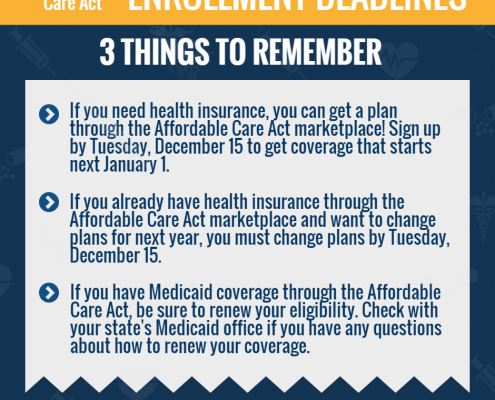 https://canceradvocacy.org/wp-content/uploads/2015/12/Enrollment-Graphic.png
940
940
actualizedevs
https://canceradvocacy.org/wp-content/uploads/CancerNation_Logo_40Yrs_Stacked_TwoColor-scaled.png
actualizedevs2015-12-10 16:34:072020-10-22 07:15:27The Affordable Care Act Open Enrollment Period: Key Points on Plan Selection and Enrollment Deadlines
https://canceradvocacy.org/wp-content/uploads/2012/12/NCCS_Starburst_Thumbnail.jpg
125
125
actualizedevs
https://canceradvocacy.org/wp-content/uploads/CancerNation_Logo_40Yrs_Stacked_TwoColor-scaled.png
actualizedevs2015-12-04 14:59:032015-12-04 14:59:03WCOE: Evidence for Early Palliative Care in Cancer Patients, Big Data, #GivingTuesday, and “Hurry Up and Wait”
https://canceradvocacy.org/wp-content/uploads/2015/12/Enrollment-Graphic.png
940
940
actualizedevs
https://canceradvocacy.org/wp-content/uploads/CancerNation_Logo_40Yrs_Stacked_TwoColor-scaled.png
actualizedevs2015-12-10 16:34:072020-10-22 07:15:27The Affordable Care Act Open Enrollment Period: Key Points on Plan Selection and Enrollment Deadlines
https://canceradvocacy.org/wp-content/uploads/2012/12/NCCS_Starburst_Thumbnail.jpg
125
125
actualizedevs
https://canceradvocacy.org/wp-content/uploads/CancerNation_Logo_40Yrs_Stacked_TwoColor-scaled.png
actualizedevs2015-12-04 14:59:032015-12-04 14:59:03WCOE: Evidence for Early Palliative Care in Cancer Patients, Big Data, #GivingTuesday, and “Hurry Up and Wait” https://canceradvocacy.org/wp-content/uploads/Cap-Dome-Nov-2015.jpg
321
700
actualizedevs
https://canceradvocacy.org/wp-content/uploads/CancerNation_Logo_40Yrs_Stacked_TwoColor-scaled.png
actualizedevs2015-12-04 13:00:572020-11-23 13:29:19NCCS Offers Comments on Alternative Payment Models for Cancer Care as Part of the Merit-Based Incentive Payment System (MIPS)
https://canceradvocacy.org/wp-content/uploads/Cap-Dome-Nov-2015.jpg
321
700
actualizedevs
https://canceradvocacy.org/wp-content/uploads/CancerNation_Logo_40Yrs_Stacked_TwoColor-scaled.png
actualizedevs2015-12-04 13:00:572020-11-23 13:29:19NCCS Offers Comments on Alternative Payment Models for Cancer Care as Part of the Merit-Based Incentive Payment System (MIPS) https://canceradvocacy.org/wp-content/uploads/2015/12/ASC_151416-Cancer-Survivors-Event-Banner-Ads-300x250-RSVP.jpg
250
300
actualizedevs
https://canceradvocacy.org/wp-content/uploads/CancerNation_Logo_40Yrs_Stacked_TwoColor-scaled.png
actualizedevs2015-11-30 09:13:412021-02-12 09:52:42Event Announcement: Attend An Evening for Cancer Survivors & Caregivers in San Francisco on January 14th
https://canceradvocacy.org/wp-content/uploads/2015/12/ASC_151416-Cancer-Survivors-Event-Banner-Ads-300x250-RSVP.jpg
250
300
actualizedevs
https://canceradvocacy.org/wp-content/uploads/CancerNation_Logo_40Yrs_Stacked_TwoColor-scaled.png
actualizedevs2015-11-30 09:13:412021-02-12 09:52:42Event Announcement: Attend An Evening for Cancer Survivors & Caregivers in San Francisco on January 14th https://canceradvocacy.org/wp-content/uploads/2015/01/20years.gif
500
500
actualizedevs
https://canceradvocacy.org/wp-content/uploads/CancerNation_Logo_40Yrs_Stacked_TwoColor-scaled.png
actualizedevs2015-11-22 15:49:192015-11-22 15:49:19Dr. Julia Rowland Discusses the Importance of Psychosocial Care: Engagement and Dialogue
https://canceradvocacy.org/wp-content/uploads/2012/12/NCCS_Starburst_Thumbnail.jpg
125
125
actualizedevs
https://canceradvocacy.org/wp-content/uploads/CancerNation_Logo_40Yrs_Stacked_TwoColor-scaled.png
actualizedevs2015-11-20 10:18:172015-11-20 10:18:17WCOE: 65 Charts Illustrate Consumer Options from Kaiser, Low Income Is a Barrier to Clinical Trial Enrollment, NCCS CPAT Webinar Archives, and Resources for Spanish-Speaking Individuals
https://canceradvocacy.org/wp-content/uploads/2015/01/20years.gif
500
500
actualizedevs
https://canceradvocacy.org/wp-content/uploads/CancerNation_Logo_40Yrs_Stacked_TwoColor-scaled.png
actualizedevs2015-11-22 15:49:192015-11-22 15:49:19Dr. Julia Rowland Discusses the Importance of Psychosocial Care: Engagement and Dialogue
https://canceradvocacy.org/wp-content/uploads/2012/12/NCCS_Starburst_Thumbnail.jpg
125
125
actualizedevs
https://canceradvocacy.org/wp-content/uploads/CancerNation_Logo_40Yrs_Stacked_TwoColor-scaled.png
actualizedevs2015-11-20 10:18:172015-11-20 10:18:17WCOE: 65 Charts Illustrate Consumer Options from Kaiser, Low Income Is a Barrier to Clinical Trial Enrollment, NCCS CPAT Webinar Archives, and Resources for Spanish-Speaking Individuals