Cancer Nation Policy Roundtable
Fall 2025
November 5, 2025 | Washington, DC
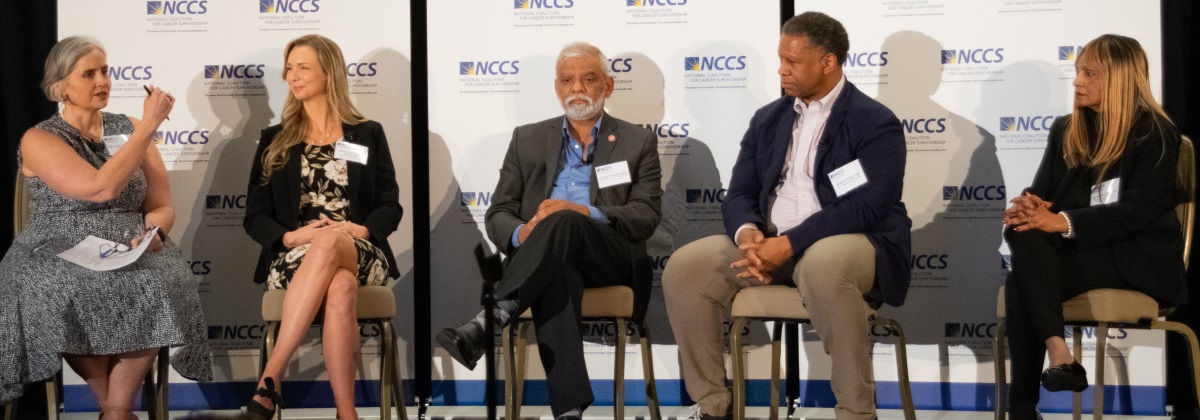
Panel Discussion: Patient Navigation (Spring 2023 Cancer Policy Roundtable)
For 25 years, the Cancer Nation Policy Roundtable has convened survivors, advocates, policymakers, and leaders in cancer care to discuss policies that affect access, affordability, quality, and innovation. The conversations ensure the experiences of people living with, through, and beyond cancer are central to shaping better cancer care.
Cancer Nation convened another successful roundtable on November 5, 2025, hosting a compelling series of panels and guest speakers discussing critical issues in quality cancer survivorship care.
Read session summaries and see photos from the event in the Fall 2025 Cancer Nation Policy Roundtable Executive Summary.
Meeting Agenda
Note: All times Eastern. Session times subject to change.
- 8:30 AM – Registration and Coffee
- 9:00 AM – Survivor Perspective
- Tom Warren
Head and Neck Cancer Survivor
- Tom Warren
-
9:30 AM – Medicaid: What’s Next After the One Big Beautiful Bill Act?
This panel will explore how the new law is reshaping Medicaid, what it means for patients with cancer, and the policy questions that remain for states and the federal government.
- Catherine Finley
Partner, Thorn Run Partners, Modern Medicaid Alliance - Lydia Isaac, PhD, MSc
Vice President, Health Equity & Policy, National Urban League - Anushree Vichare, PhD, MPH, MBBS
Associate Professor, Milkin School of Public Health, George Washington University
- Catherine Finley
- 10:30 AM – Break
-
10:45 AM – Safeguarding the Future: Federal and Academic Workforce Challenges in Cancer Research and Care
Federal health agencies and academic institutions face unprecedented workforce losses due to layoffs, retirements, and resignations. This discussion will explore how instability threatens research, regulation, program delivery, and patient care—and consider strategies to sustain the talent needed to advance cancer research and care.
- Kalah Auchincloss, JD, MPH
Founder, Auchincloss Legal Group - Nikki Hayes, MPH
Retired, Senior Public Health Advisor - Elaine Kamarck, PhD
Senior Fellow – Governance Studies, Brookings Institution - Ellen Lukens, MPH
Managing Principal, Health Transformation Strategies
- Kalah Auchincloss, JD, MPH
- 11:45 AM – Keynote Address: Cancer Policy Update
- Scott Gottlieb, MD
Former Commissioner, U.S. Food and Drug Administration
- Scott Gottlieb, MD
- 12:30 PM – Lunch
-
1:30 PM – Cancer Payment Reform: Balancing Access, Quality, and Cost
Cancer care is among the most complex and costly areas of health care, and payment reform is reshaping how care is delivered. This panel will examine lessons from recent federal models, proposals from oncology societies, and the implications of Medicare drug price negotiations—exploring how policy can balance access, quality, and cost while sustaining innovation.
- Dave Adler, MA
Vice President of Advocacy, ASTRO - Roy Beveridge, MD
Senior Strategic Advisor, Avalere Health - Janette Merrill, DHA CHES
Senior Director of Care Innovation, ASCO
- Dave Adler, MA
- 2:30 PM – Sharing Patient Stories on the Value of Research
- Laurie McGinley
Board Member, Patient Action for Cancer Research (PACR) - Kelly Cuvar
Board Member, Patient Action for Cancer Research (PACR)
- Laurie McGinley
Speaker Biographies
Scott Gottlieb, MDDave Adler, MAKalah Auchincloss, JDRoy Beveridge, MDKelly CuvarCatherine FinleyNikki Hayes, MPHLydia A. Isaac, PhD, MScElaine Kamarck, PhDEllen Lukens, MPHLaurie McGinleyJanette Merrill, DHA CHESShelley Fuld Nasso, MPPAnushree Vichare, PhD, MPHTom Warren
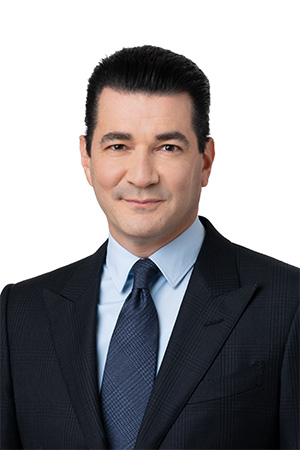 Scott Gottlieb, MD
Former Commissioner, U.S. Food and Drug Administration
Scott Gottlieb, MD, is a senior fellow at the American Enterprise Institute (AEI). He returned to AEI in 2019 after serving as the 23rd commissioner of the Food and Drug Administration (FDA). At AEI, he continues his work on improving public health through entrepreneurship and medical innovation and on expanding regulatory approaches to maintain patient and physician autonomy. Dr. Gottlieb is also a special partner with the venture capital firm New Enterprise Associates and serves on the boards of Pfizer, Illumina, Aetion, and Tempus.
At the FDA, Dr. Gottlieb focused on a wide variety of issues, including drug pricing, medical product innovation, food safety, vaccination, and tobacco and vaping. He advanced new policies to address opioid addiction, working to rationalize prescribing as a way to reduce the rate of new addiction. He helped make the regulatory process for the development and review of novel drug and medical devices more efficient, including the approval of the first gene-therapy-based cancer treatment. He also presided over a record number of novel drug and medical device approvals in 2017 — and then broke that record in 2018.
Dr. Gottlieb helped promote competition through the approval of a record number of generic drugs, including the creation of new pathways for developing generic copies of complex drugs. He also helped advance the FDA’s Oncology Center for Excellence, which fosters a collaborative scientific environment to improve the development and regulation of oncology products. In addition, he helped implement the 21st Century Cures Act to accelerate medical product development.
Dr. Gottlieb previously served in other capacities at the FDA, including as deputy commissioner for medical and scientific affairs, senior adviser for medical technology, and director of medical policy development. Earlier, he served as senior policy adviser to the administrator at the Centers for Medicare & Medicaid Services. Until he joined the FDA as commissioner, he was also a clinical assistant professor at New York University School of Medicine. Earlier, he was a practicing physician and hospitalist concurrently with his AEI work.
In addition to his frequent testimonies before Congress, Dr. Gottlieb is often published and interviewed by the media. A contributor to CNBC, his interviews range from Face The Nation, CBS News to Fox News, and his commentary and articles have appeared in Health Affairs, The Wall Street Journal, The Washington Post, and The New York Times, among other outlets.
Dr. Gottlieb has a medical degree from Mount Sinai School of Medicine and did his residency in internal medicine at the Mount Sinai Medical Center. He has a BA in economics from Wesleyan University.
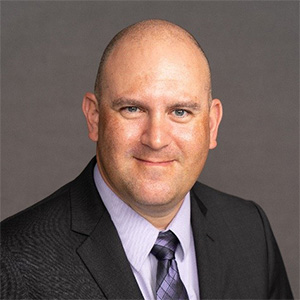 Dave Adler, MA
Vice President, Advocacy
American Society for Radiation Oncology (ASTRO)
Dave Adler is the Vice President of Advocacy for the American Society for Radiation Oncology (ASTRO), the leading radiation oncology professional society in the world. In this role, Dave leads the development and execution of ASTRO’s legislative and regulatory agenda, including advocacy with Congress, federal agencies and private payers on issues involving Medicare payment, cancer research, insurance coverage and coding. During his 18 years with ASTRO, Dave has served in several roles managing and directing the Society’s legislative and health policy initiatives. Prior to joining ASTRO, Dave served as Director of Government Affairs at the American Health Quality Association (AHQA), where he lobbied Congress and federal agencies on behalf of Medicare’s Quality Improvement Organizations. Before joining AHQA, Dave was a reporter for CD Publications, covering health care and welfare funding news in Congress and the administration. Dave also previously served as a business reporter for the Capital-Gazette newspaper company, covering Anne Arundel County, Maryland. Dave has a Master’s degree in Journalism from Northeastern University in Boston, and he graduated with a Bachelor’s degree in International Affairs from The George Washington University in Washington, DC.
 Kalah Auchincloss, JD, MPH
Founder
Auchincloss Legal Group, PLLC
Kalah counsels a broad array of clients across a range of product sectors and is knowledgeable about multiple areas of FDA regulation, including drugs and biologics, compounding, unapproved drugs, diagnostics, digital health, cosmetics, and cell and gene therapy.
Kalah leverages her experience at FDA, on Capitol Hill, and in the private sector as a former consultant and attorney to advise clients on regulatory policy, compliance, enforcement, and other actions. Most recently, Kalah spent 8 years as a consultant to major pharma, biotech and medical device companies providing strategic regulatory advice.
Prior to her consulting and legal roles, Kalah spent six years at the FDA, including as Deputy Chief of Staff to Commissioner Robert Califf. As Deputy Chief of Staff, Kalah worked with senior FDA leadership to manage crises, develop policy decisions, implement communications strategies, and liaise with the Department of Health and Human Services, the White House, and other agencies. Kalah was also a primary point of contact in the immediate Office of the Commissioner for the six FDA Centers and other components of the Commissioner’s Office.
Prior to that role, Kalah spent time on Capitol Hill as the FDA detailee to the Senate Committee on Health, Education, Labor, and Pensions, working on the 21st Century Cures Act and other FDA-related legislation. She has also served in the FDA’s Center for Drug Evaluation and Research (CDER) as a regulatory counsel in the Office of Regulatory Policy, and as Director of CDER’s Office of Unapproved Drugs and Labeling Compliance in the Office of Compliance, leading a team of more than 50 staff working on pharmacy compounding, unapproved drugs, over-the-counter drugs, and other enforcement issues.
Kalah holds a B.A. in history from Williams College, a J.D from Georgetown University Law Center, and an MPH from Harvard University’s School of Public Health.
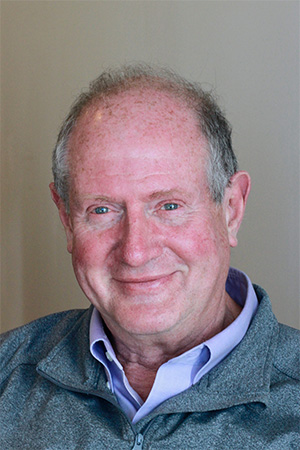 Roy Beveridge, MD
Senior Strategic Advisor
Avalere Health
Roy Beveridge, MD, a medical oncologist, provides insights and support across all Avalere practices, including the Center for Healthcare Transformation, Financial Services, and the Market Access team.
Roy most recently served as the chief medical officer of Humana, where he led clinical policy, population health, and clinical quality initiatives. He held similar roles at US Oncology and McKesson Specialty Health. His practical perspective on the dynamic between payers and providers as they engage around therapies and services is invaluable to our clients. His recent work has focused on social determinants of health and improving the health of underserved populations. He has published more than 200 papers.
Roy has a BA in biology from the Johns Hopkins University and an MD from Cornell University. He also received internal medicine training at the University of Chicago and did an oncology fellowship at Johns Hopkins.
 Kelly Cuvar
Board Member, PACR — Patient Action for Cancer Research
Kelly was diagnosed with a rare type of sarcoma in 1999 and has never been in remission. Over the last 25+ years, she has participated in four clinical trials and undergone an experimental surgery in pursuit of advancing treatment options.
Her commitment to the cancer community extends beyond her personal experience.
Professionally, Kelly has served as a congressional finance consultant, raising funds for there-election of lawmakers who champion cancer research and expand healthcare access.
Kelly continues to support cancer patients across her advocacy, fundraising, and policy work, and she brings a unique perspective from the intersection of research, legislation, and lived experience.
 Catherine Finley
Partner, Modern Medicaid Alliance
Catherine Finley has been helping to shape federal and state health care policy for over 20 years. Drawing on her extensive Capitol Hill and state experience, she brings to Thorn Run Partners a unique ability to identify public policy opportunities, develop effective lobbying strategies and achieve success by utilizing her wide network of bipartisan relationships
with key decision-makers. Ms. Finley maintains close ties to the Senate Finance and HELP Committees, as well as the House Energy and Commerce Committee.
Ms. Finley previously served as Staff Director for the U.S. Senate Special Committee on Aging, where she oversaw committee operations on behalf of Senator Gordon H. Smith (ROR), during his tenure as both chair and ranking member. As Staff Director, Ms. Finley was the Senator’s lead negotiator on critical health care legislation involving Medicare, Medicaid and the Children’s Health Insurance Program. She also led Senator Smith’s health and human services legislative agenda related to the Senate Finance Committee; the Senate Health, Education, Labor and Pensions (HELP) Committee; and the Senate Appropriations Subcommittee on Labor-HHS-Education. Ms. Finley has also served as
Senior Health Policy advisor for Senator Olympia J. Snowe (R-ME), where she advised the Senator on all health and human services issues, including development and enactment of the Medicare Modernization Act.
Ms. Finley’s policy expertise in Medicaid and other state health care programs was honed while serving as Legislative Director for Health and Human Services at the Southern Governors Association, where she represented the Southern states before Congress and the Administration on important regional and national health care matters. Ms. Finley was
also a Policy Advisor to Governor George W. Bush and a Legislative assistant for the Texas Senate Committee on Health and Human Services.
Ms. Finley received her B.S. in Business Economics from Miami University in Oxford, Ohio.
She holds minors in Political Science and International Business.
 Nikki Hayes, MPH
Retired, Senior Public Health Advisor
Nikki Hayes, MPH, recently retired after more than 32 years of distinguished service with the U.S. Department of Health and Human Services, including pivotal roles at the National Institutes of Health (NIH) and the Centers for Disease Control and Prevention (CDC). At the National Institute for Dental and Craniofacial Research, she led the creation and management of the DNA Sequencing Core Facility, accelerating research and supporting numerous projects annually. Her visionary leadership helped expand scientific capacity and foster innovation across disciplines.
In her final role as Senior Public Health Advisor at the CDC, Ms. Hayes led one of the agency’s flagship cancer prevention and control programs, reaching over four million Americans annually. She also oversaw national programs supporting cancer survivors, metastatic breast cancer patients, and caregivers, and directed efforts to reduce commercial tobacco use among priority populations, helping mitigate cancer risks in underserved communities.
Ms. Hayes is known for her teamwork and leadership, uniting experts from various fields to improve cancer control strategies and partnering with community organizations to enhance program impact.
Ms. Hayes has published several manuscripts and presented on cancer prevention and control strategies globally. She is committed to health equity, and believes everyone deserves quality care and, even in retirement, consults on public health projects that advance wellness and justice.
Nikki Hayes’s dedication, achievements, and leadership have made a significant impact on public health, inspiring professionals and communities toward a healthier, more equitable future.
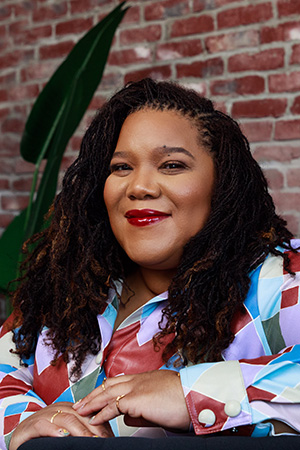 Lydia A. Isaac, PhD, MSc
Vice President, Health Equity and Policy
National Urban League
Lydia Isaac is the Vice President for Health Equity and Policy at the National Urban League. Dr. Isaac has a faculty appointment at the Johns Hopkins Bloomberg School of Public Health in the Department of Health Policy and Management. She most recently served as an Associate Research Professor and Executive Director of the RWJF funded Health Policy Research Scholars Program (HPRS) program at George Washington University where she was responsible for the day-to-day operations and curriculum development for the program. Previously, she was the Director of Policy and Health Systems Analysis in the Office of Policy, Planning and Strategic Data in the First Deputy Commissioner’s office at the NYC Department of Health and Mental Hygiene. In addition, she has worked in healthcare where she was the Director of Quality Improvements and Grants for HIV Services at the NYC Health and Hospitals Corporation which is the Public Benefit Corporation of the public hospitals of NYC.
Dr. Isaac has worked in local and state government throughout her career and in academia where she has taught classes on community health assessment and the social disparities in health. She has a bachelors’ degree in Ecology and Evolutionary Biology from Princeton University, a Master of Science degree in Health and Social behavior from the Harvard School of Public Health and a doctorate in Health Policy and Management from the Johns Hopkins Bloomberg School of Public Health.
Dr Isaac is vice chair of the Board of ChangeLab Solutions a health law nonprofit based in Oakland, CA and sits on the board of APICHA, a Federally Qualified Health Center (FQHC) in NYC. She was also appointed to the Center for Medicare and Medicaid Services (CMS) Advisory Panel on Outreach and Education.
Dr. Isaac is passionate about advancing Health Equity by translating research into policy and practice, investigating the mechanisms that lead to racial and ethnic health disparities, emphasizing the social determinants of health and highlighting the importance of the neighborhood environment and its role in health promotion.
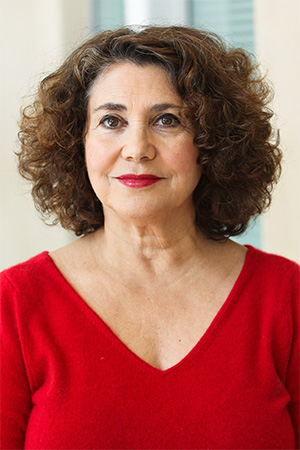 Elaine Kamarck, PhD
Senior Fellow
The Brookings Institute
Elaine C. Kamarck is a senior fellow in Governance Studies and the director of the Center for Effective Public Management at Brookings. She is an expert on American electoral politics and government innovation and reform in the United States, OECD nations, and developing countries. She focuses her research on the presidential nomination system and American politics and has worked in many American presidential campaigns.
Kamarck is the co-author of “Lies That Kill: A Citizen’s Guide to Disinformation” (Brookings Press, 2024, written with Darrell West) and the author of “Primary Politics: Everything You Need to Know about How America Nominates Its Presidential Candidates”, and “Why Presidents Fail And How They Can Succeed Again.” She is also the author of “How Change Happens—or Doesn’t: The Politics of US Public Policy” and “The End of Government-As We Know It: Making Public Policy Work.” Kamarck is also a lecturer in public policy at the Harvard Kennedy School of Government. She started at the Kennedy School in 1997 after a career in politics and government. She has been a member of the Democratic National Committee (DNC) and the DNC’s Rules Committee since 1997. She has participated actively in four presidential campaigns and in 10 nominating conventions—including two Republican conventions—and has served as a superdelegate to five Democratic conventions. In the 1980s, she was one of the founders of the New Democrat movement that helped elect Bill Clinton president. She served in the White House from 1993 to 1997, where she created and managed the Clinton administration’s National Performance Review, also known as the “reinventing government initiative.” At the Kennedy School, she served as director of Visions of Governance for the Twenty-First Century and as faculty advisor to the Innovations in American Government Awards Program. In 2000, she took a leave of absence to work as senior policy advisor to the Gore campaign.
Kamarck conducts research on 21st century government, the role of the internet in political campaigns, homeland defense, intelligence reorganization, and governmental reform and innovation. Kamarck makes regular appearances in the media, including segments on: ABC, CBS, NBC, the BBC, CNN, Fox News Now New England Cable News, and National Public Radio. Kamarck received her Ph.D. in political science from the University of California, Berkeley.
 Ellen Lukens, MPH
Managing Principal
Health Transformation Strategies
Ellen Lukens is a health policy leader with deep expertise in the design and operations of the federal health insurance programs. Ellen brings over two decades of experience in consulting and federal government roles, tackling some of healthcare’s most critical challenges. Most recently, Ellen served as Deputy Director of the CMS Innovation Center, where she led a large team in developing and implementing innovative payment and care delivery models to improve quality and reduce costs in Medicare and Medicaid. Prior to her tenure at CMS, Ellen was a Senior Vice President at Avalere Health, where she led the Provider Practice, advising clients across the healthcare landscape – including health plans, providers, and pharmaceutical manufacturers.
During her tenure at CMS, Ellen received several awards, including an Administrator’s award for her work on drug pricing. She presents widely to offer insights into the current healthcare landscape, as well as future challenges and opportunities.
Ms. Lukens began her health policy career as Presidential Management Fellow at CMS. She earned her bachelor’s degree from Northwestern University and a Master’s in Public Health from the University of Michigan.
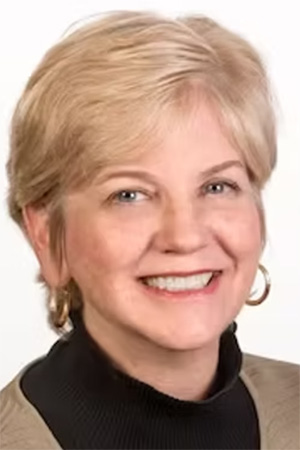 Laurie McGinley
Board Member, PACR — Patient Action for Cancer Research
Laurie McGinley is an award-winning journalist who has covered cancer research, health care policy and the Food and Drug Administration, most recently for The Washington Post. A former health and science editor and reporter at The Post, she also worked for The Wall Street Journal, where she was part of a team awarded the Pulitzer Prize for stories on AIDS. She left daily journalism at the end of 2023 after a four-decade career that also included working for The Los Angeles Times and KFF Health News. Currently, she is writing freelance articles and is a board member for Patient Action for Cancer Research, an advocacy group dedicated to elevating patients’ voices in discussions about cancer research. She lives in Washington, D.C.
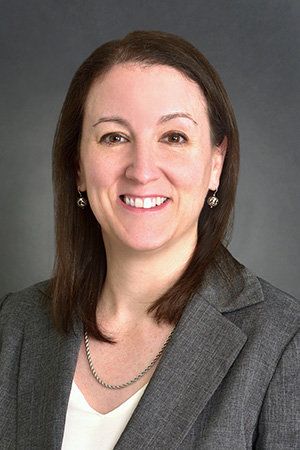 Janette Merrill, DHA CHES
Senior Director, Care Innovation
American Society of Clinical Oncology
Janette Merrill, DHA CHES, Senior Director, Care Innovation, at the American Society of Clinical Oncology (ASCO) provides programmatic and strategic oversight to the Society’s initiatives related to cancer care delivery and research across the care continuum. Dr. Merrill provides content expertise for legislative and regulatory analysis, education initiatives, and awareness efforts, and serves as Project Director for ASCO’s Rural Montana Access pilot. Prior to joining ASCO, she held a range of positions with public health and medical associations. Dr. Merrill earned her bachelor’s degree from Clemson University, master’s degree in health education from Virginia Tech, and Doctorate of Health Administration from Central Michigan University. She has maintained the credential of Certified Health Education Specialist (CHES) since earning it in 2008.
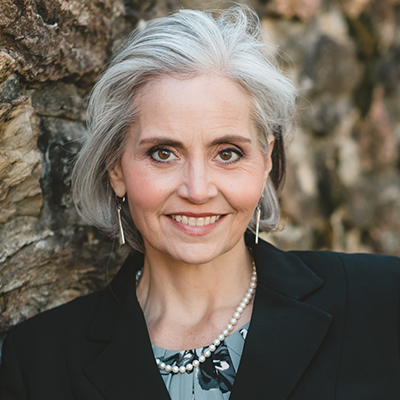 Shelley Fuld Nasso, MPP
Chief Executive Officer
Cancer Nation
Shelley Fuld Nasso, MPP, is CEO of Cancer Nation—the voice of the 18 million Americans living with, through, and beyond cancer. Under her leadership, Cancer Nation (formerly the National Coalition for Cancer Survivorship) pushes for bold policy change to ensure every survivor has the right to not just survive—but thrive. From Capitol Hill to cancer centers, Shelley elevates survivor voices and demands care that actually works for the people living it.
A defining part of her work is helping survivors and caregivers find their voice in the democratic process—whether it’s their first visit to Capitol Hill or telling their story to someone in power. Through advocacy training and deep community-building, she empowers people to speak out, be heard, and help shape the policies that shape their lives.
Before joining Cancer Nation in 2013, she led public policy initiatives at Susan G. Komen. She holds degrees from Rice University and the Harvard Kennedy School. Shelley’s advocacy is deeply personal—rooted in love for her friend Dr. Brent Whitworth, a compassionate physician who died of cancer at 43, and in solidarity with countless others in her life affected by cancer.
She lives in Maryland with her husband and three sons. When not pushing for a cure for care, she’s likely found on a paddleboard, in a yoga class, or solving a crossword.
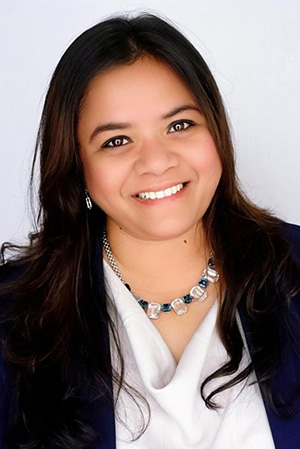 Anushree Vichare, PhD, MPH, MBBS
Associate Professor, Fitzhugh Mullan Institute for Health Workforce Equity, Department of Health Policy and Management, Milken Institute of Public Health, George Washington University
Dr. Anushree Vichare is an Associate Professor in the Department of Health Policy and Management and is affiliated with the Fitzhugh Mullan Institute for Health Workforce Equity at the Milken Institute School of Public Health at George Washington University. Dr. Vichare has a PhD in Healthcare Policy and Research and is a primary care physician. Her research is focused on investigating how Medicaid policies affect healthcare access, utilization, and health outcomes among low-income populations, with a particular focus on the role of health workforce. She has previously worked with medical societies in developing practice improvement tools such as clinical practice guidelines and quality measures to improve cancer care. In her current role, Dr. Vichare serves as an investigator on a robust portfolio of extramural-funded projects that examine how health workforces’ composition, diversity and distribution impacts access to care and quality of care for Medicaid beneficiaries, including a focus on cancer care and maternal health care. Recent projects examine the role of patient-clinician concordance in improving primary care utilization among Medicaid beneficiaries and delineating the workforce caring for Medicaid beneficiaries with a cancer diagnosis.
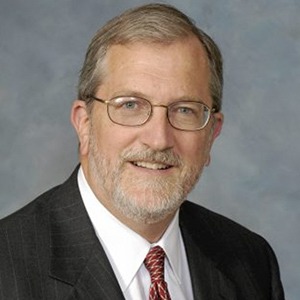
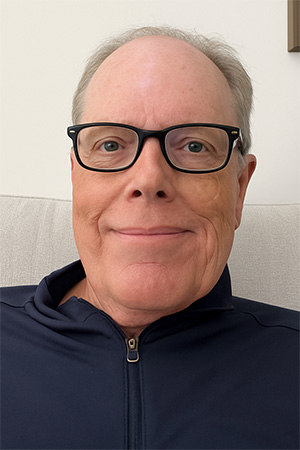 Tom Warren
Head and Neck Cancer Survivor
Tom Warren spent over 40 years in leadership, helping organizations grow by empowering people and building strong cultures. In 2019, his life changed when diagnosed with Facial Angiosarcoma, a rare and aggressive cancer. After enduring 15 surgeries, 50 rounds of proton therapy, and 38 chemotherapy treatments, Tom lost his left eye and now lives with lasting effects of the disease.
But his story is one of resilience, not loss. Today, Tom finds joy in hiking, golfing, and staying active, and this November he will celebrate six years with No Evidence of Disease. His journey is a testament to courage, perseverance, and the power of choosing to keep moving forward. And at times pain.
Cancer Nation Policy Roundtable Fall 2025 Sponsors
(as of 11/4/2025)
Premier

Supporting