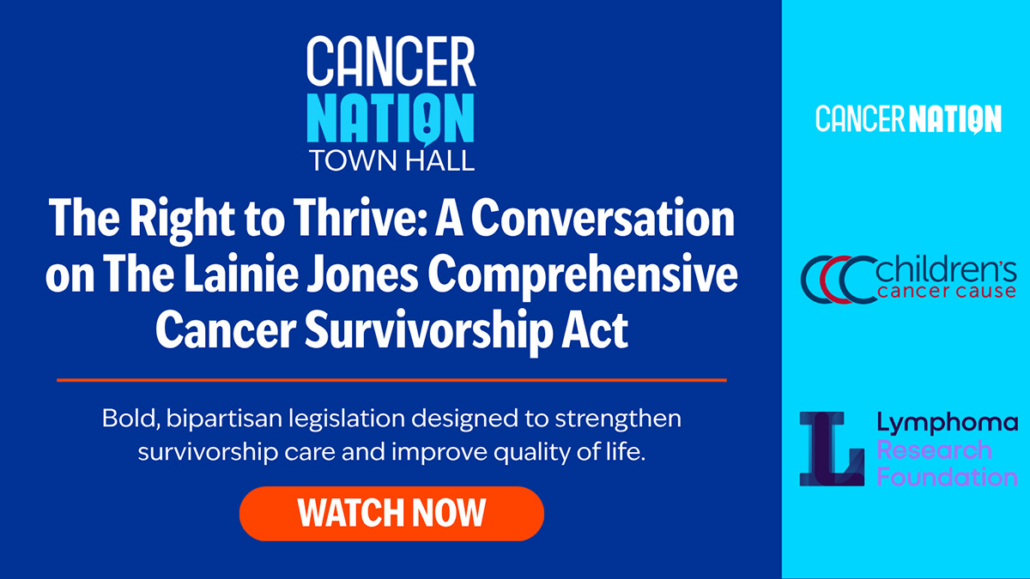
The Right to Thrive: A Conversation on the Lainie Jones Comprehensive Cancer Survivorship Act
On June 15, Cancer Nation co-hosted a virtual town hall with the Lymphoma Research Foundation and Children’s Cancer Cause to build support for H.R. 8839, the Lainie Jones Comprehensive Cancer Survivorship Act (CCSA).
This bold, bipartisan legislation is designed to strengthen survivorship care and improve quality of life for the nearly 18 million Americans living with, through, and beyond cancer. From quality survivorship care planning and care coordination to employment support, this conversation explores how the bill addresses the real challenges survivors face every day and what it could mean for the future of cancer care.
Watch the town hall below or here on YouTube.
Video Details
Recording Chapters:
- 00:00 Introduction to the Lainie Jones CCSA
- 01:45 Cancer survivorship by the numbers
- 05:07 Message from Rep. Wasserman Schultz
- 07:26 What does the bipartisan CCSA do?
- 22:30 Survivor Voices: Why this bill is needed
- 47:00 How you can tell Congress to pass the CCSA
- 54:54 Sharing the CCSA with your community
- 55:45 Contacting Congress makes an impact!
Featured Speakers:
- Sue Emmer | I Street Advocates
- Meghan Gutierrez | CEO, Lymphoma Research Foundation
- Cierra Morgan, MS | Children’s Cancer Cause
- Shelley Fuld Nasso, MPP | CEO, Cancer Nation
- Whitney Neighbors | Lymphoma Research Foundation
- Daria Ross, MPH | Cancer Nation Ambassador
- Steve Wosahla | CEO, Children’s Cancer Cause
Links & Other Resources:
About the Bill
The Lainie Jones Comprehensive Cancer Survivorship Act is bipartisan legislation introduced in the U.S. House of Representatives by Reps. Debbie Wasserman Schultz (D-FL), Brian Fitzpatrick (R-PA), Mark DeSaulnier (D-CA), and Joe Wilson (R-SC). The bill addresses the full spectrum of cancer survivorship, from diagnosis through the end of life. More than 50 national cancer organizations have already endorsed it.
The bill includes eight key provisions:
- Medicare coverage for cancer care planning. Establishes reimbursement for clinicians to provide survivorship care plans at diagnosis, during treatment changes, and at the transition to post-treatment care. In Cancer Nation’s 2025 Survivorship Survey, only 36% of survivors received a survivorship care plan, down from 43% the prior year, even survivors who received one reported feeling more confident managing their post-treatment care.
- Survivorship transition tools. Directs a stakeholder process to develop and publish best practices for using health information technology to improve care transitions, making it easier for survivors to carry a complete record of their cancer treatment into the rest of their lives.
- Alternative payment model study. Commissions research to identify gaps in survivorship care, unmet needs, access and reimbursement barriers, and variations in quality and outcomes, with the goal of designing a data-driven payment model.
- Employment assistance program. Creates grants for nonprofit organizations supporting cancer survivors facing workforce challenges, including time off, transportation, and childcare.
- Survivorship progress report. Directs the Government Accountability Office to assess progress under the National Cancer Act of 1971 and evaluate the contributions of the Office of Cancer Survivorship.
- Medicaid coverage for pediatric and adolescent survivorship. Formalizes transition-of-care plans as a Medicaid benefit for childhood and adolescent cancer survivors, so that young people moving from active treatment into the rest of their lives have a documented road map for their ongoing care.
- Medicaid coverage for fertility preservation. Ensures coverage for fertility preservation services under Medicaid for survivors whose cancer treatment may affect their ability to have biological children in the future. For adolescents and young adults, preserving fertility can be a significant quality of life issue that extends far beyond treatment.
- Office of Cancer Survivorship. Places the Office of Cancer Survivorship within the Office of the Director of the National Cancer Institute and provides it the authority to fund survivorship research, support education and communication efforts, and serve survivors, researchers, and the clinicians who care for them. Established in 1996, the Office has never had a statutory foundation. This provision would change that.
Voices from the Conversation
Congresswoman Wasserman Schultz, a breast cancer survivor herself, named the bill for her late friend and constituent Lainie Jones, who survived seven different types of cancer before passing away. “Survivorship must address the aspects of our lives that intersect with our physical and mental health, like education, work, transportation, children, and more,” she said.
Three survivors joined a panel discussion to share what this legislation means in practice. Cierra Morgan, 22, has been living with carcinoid cancer since age 14 and described navigating the transition from pediatric to adult care largely on her own, including figuring out fertility preservation options no one had raised when she was first diagnosed.
“No one really prepared me to be in the adult ward when I turned 18, even though I still felt like a kid.”
— Cierra Morgan, carcinoid cancer survivor, Children’s Cancer Cause
Whitney Neighbors, an eight-year survivor of stage 4 diffuse large B-cell lymphoma, described feeling “adrift” when her oncologist left her treating hospital, never having received a formal survivorship plan, and spending years without clear answers about whether her ongoing symptoms were treatment-related.
“It’s time for phase two of cancer treatment: research and support for diagnosing and treating long-term side effects and early detection for secondary cancers.”
— Whitney Neighbors, stage 4 diffuse large B-cell lymphoma survivor,
Lymphoma Research Foundation
Daria Ross, a seven-year triple negative breast cancer survivor and public health professional, shared discovering years after treatment that the neuropathy causing her to fall was a long-term effect of chemotherapy. She learned it not from a doctor, but from a conversation with other survivors at a Cancer Nation summit.
“Once you are in this club of cancer survivorship, everything that your body does, you’re reacting to. That never goes away. Having a survivorship care plan as a guide, as a compass, would be so tremendous.”
— Daria Ross, triple negative breast cancer survivor, Cancer Nation
All three emphasized that self-advocacy should not be a prerequisite for good survivorship care, and that marginalized communities face the steepest barriers.
How to Take Action
- Contact Your Representatives and ask them to co-sponsor the Lainie Jones Comprehensive Cancer Survivorship Act. Visit house.gov to find your member’s office and phone number, or call the Capitol switchboard at (202) 224-3121. When you call, identify yourself as a constituent, name the bill and its House bill number (H.R. 8839), share your personal connection to cancer survivorship, and make a direct ask for co-sponsorship.
- Sign-On as an Endorser: If you are a national nonprofit organization, medical center, or medical professional society, please consider signing on in support of the bill. Sign On Here (Google Form)
- Spread the Word: Download and share our CCSA Social Media Toolkit to help raise awareness and amplify support for the CCSA. Whether you are an advocate, organization, or community partner, this ready-to-use resource makes it easy to share information and encourage support for the bill. The toolkit includes handles, hashtags, sample posts, and a link to a graphics template to get you started.
CCSA Social Media Toolkit
About the Speakers
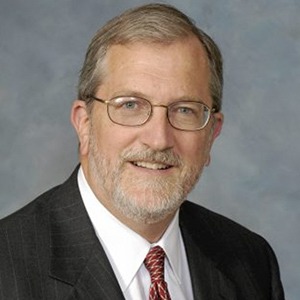
 Sue Emmer
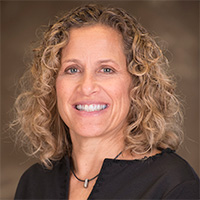 Sue Emmer
Sue founded Emmer Consulting (which later became I Street Advocates) in 1999. In that time, she has carved out a reputation as a health expert who advocates for non profit clients representing hospice, long term care, child cancer survivors, and people living with Alzheimer’s.
Sue started her career on Capitol Hill where she quickly rose to senior advisor positions. From 1988 to 1994, Sue served in key roles on Capitol Hill. She was a Legislative Assistant for Senator Don Riegle who served on the Senate Finance Committee. Prior to that time, she was a Legislative Assistant for Senator Bob Graham. After leaving Capitol Hill, Sue served as a health policy analyst at the Department of Health and Human Services Assistant Secretary for Legislation (ASL) office for two years.
From 1996 until September of 1999, Sue was an associate at Foley and Lardner, LLP one of the nation’s largest law firms where she served in both the government affairs and health care practice groups. During her tenure, Sue helped grow and develop a new government affairs practice.
Sue received her J.D. from The Georgetown University Law Center and her B.A in history, from Brown University, where she was a varsity tennis player. Sue is a member of the Health on Wednesday (HOW) organization, a Washington, D.C. based organization of women in Washington that represents the interests of health professionals and trade associations.
Meghan Gutierrez
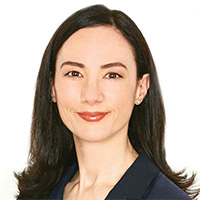 Meghan Gutierrez
Meghan Gutierrez is the Chief Executive Officer of the Lymphoma Research Foundation, the nation’s largest nonprofit organization devoted to funding lymphoma research and education, advancing both the study of new cancer therapies and improved patient care.
An expert in government relations and health care policy, Gutierrez has pursued an array of public policy issues during her career, ranging from mental health parity and rare disease awareness to medical technology and the treatment of chronic disease. Following her work as a Congressional staff member for one of the U.S. House of Representatives’ foremost leaders on health care policy, she served as a health policy and communications advisor for several national nonprofit and educational institutions, including Columbia University and the Partnership for a Drug-Free America.
Gutierrez joined the Lymphoma Research Foundation in 2008 as its chief program, policy and communications officer. She was a driving force behind programs such as the country’s only Adolescent and Young Adult Lymphoma Initiative and development of the first mobile app for people with lymphoma. She became Chief Executive Officer in 2014. In this role Gutierrez represents the Foundation before several audiences, including the U.S. Congress, Department of Defense, Food and Drug Administration and National Institutes of Health. She has written and lectured extensively about the needs of lymphoma patients and served on committees and panels of the American Society of Clinical Oncology, American Society of Hematology, Institute of Medicine, and National Cancer Institute, among others.
Cierra Morgan, MS
 Cierra Morgan, MS
Cierra Morgan is a childhood cancer survivor, and advocate who is passionate about using storytelling to create connection and change. After being diagnosed with carcinoid cancer as a teenager, she learned firsthand how life-changing a strong support system can be and how important it is for patients and families to feel seen, heard, and understood.
A graduate of the University of Southern California, Cierra studied Journalism and Health & Human Sciences, combining her love of writing with her interest in healthcare and patient advocacy.
Throughout her journalism career, Cierra has reported on health, education, and public policy issues for outlets including the Los Angeles Times, The Washington Times, and USC Annenberg Media. She has also written for The Children’s Cancer Cause, where she interviewed survivors and families and explored topics ranging from mental health to long-term survivorship care.
Whether she’s reporting a story, mentoring a young patient, or speaking about her own journey, Cierra believes in the power of sharing experiences to help others feel less alone.
In the fall Cierra will begin pursuing her Juris Doctor at Suffolk Law School in Boston, where she hopes to build on her experiences as a survivor, journalist, and advocate.
Shelley Fuld Nasso, MPP
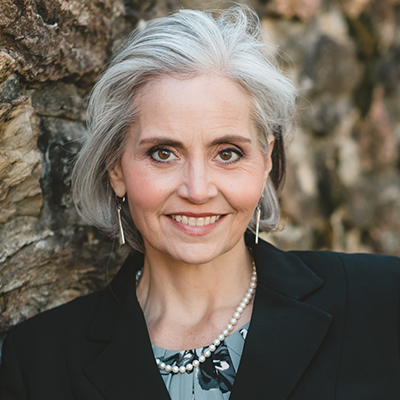 Shelley Fuld Nasso, MPP
Shelley Fuld Nasso, MPP, is CEO of Cancer Nation—the voice of the 18 million Americans living with, through, and beyond cancer. Under her leadership, Cancer Nation (formerly the National Coalition for Cancer Survivorship) pushes for bold policy change to ensure every survivor has the right to not just survive—but thrive. From Capitol Hill to cancer centers, Shelley elevates survivor voices and demands care that actually works for the people living it.
A defining part of her work is helping survivors and caregivers find their voice in the democratic process—whether it’s their first visit to Capitol Hill or telling their story to someone in power. Through advocacy training and deep community-building, she empowers people to speak out, be heard, and help shape the policies that shape their lives.
Before joining Cancer Nation in 2013, she led public policy initiatives at Susan G. Komen. She holds degrees from Rice University and the Harvard Kennedy School. Shelley’s advocacy is deeply personal—rooted in love for her friend Dr. Brent Whitworth, a compassionate physician who died of cancer at 43, and in solidarity with countless others in her life affected by cancer.
She lives in Maryland with her husband and three sons. When not pushing for a cure for care, she’s likely found on a paddleboard, in a yoga class, or solving a crossword.
Whitney Neighbors
 Whitney Neighbors
Lymphoma Touch Points
- Survivor, Diffuse Large B Cell Lymphoma, 2018
- Lymphoma Research Foundation, Board of Directors, Member (2025)
- Serve as Chair of Lymphoma Epidemiology of Outcomes (LEO) Participant Advisory Council; M.D. Anderson Cancer Center delegate, Lymphoma and Myeloma Clinic Houston, Texas (2022 to present)
- Author, Multiple Patient Advocate Letters for support of Academic and Clinical Hematology Oncology Research Grant Submissions
- Texas Gulf Coast Chapter Blood Cancer United, Member of the BCU Executive Challenge Team and Legislative Advocacy Team
- Avid Fundraiser for Blood Cancer Organizations
Personal and Professional
- Licensed Attorney in the State of Texas, 2001
- Married and have one son
Daria Ross, MPH
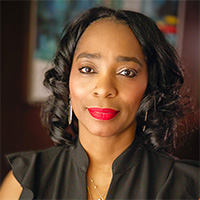 Daria Ross, MPH
Daria L. Ross is a breast cancer survivor, advocate, and community leader from Flint, Michigan. Diagnosed in 2018 with Stage 2 Triple-Negative Breast Cancer, she turned her experience into a mission to educate, empower, and advance health equity. Now a seven-year survivor, Daria champions patient education, peer support, and reducing disparities in cancer care, guided by her daily affirmation, #FaithOverFear.
She serves on the American Cancer Society’s Making Strides Flint Volunteer Leadership Committee, is a VOICES for Black Women Ambassador, and an ANGEL Advocate with the Tigerlily Foundation. As Board Chair of Girls With Knowledge, Inc., she supports initiatives that equip youth and address social, cultural & economic disparities, and, as a 2022 Elevate Ambassador with Cancer Nation, she developed advocacy and survivorship tools to support breast health and participation in clinical trials.
Beyond advocacy, Daria co-leads The Calla Lily Assignment, an event design business with her aunt, P.J., dedicated to creating memorable, story-driven experiences. She holds a Bachelor’s degree in International Relations (Magna Cum Laude) from Central Michigan University and a Master of Public Health, Population and Health Sciences from the University of Michigan, with a certificate in Health Behavior & Health Equity.
Steve Wosahla
 Steve Wosahla
As the Chief Executive Officer of Children’s Cancer Cause, Steve is responsible for the strategic management and operations of the nation’s preeminent childhood cancer policy organization.
Steve identifies and advances issues that will improve the treatment and lives of childhood cancer patients and their families with Congress, the Administration, federal agencies and state governments. He is also responsible for ensuring that families have the opportunity to participate as advocates in the policy process.
In his three decades of executive leadership at health organizations and nonprofits, including positions with the American Diabetes Association, HopeLink, and the National Multiple Sclerosis Society, Wosahla has demonstrated steady, effective leadership and an aptitude for creating value-added partnerships. Prior to joining the Children’s Cancer Cause in 2020, Wosahla served as Vice-President of Corporate Alliances & Solutions for the American Cancer Society.
Steve can be contacted on any questions concerning organizational management, public policy positioning or program development.