Survivorship Survey
2025 Study

2025 Study
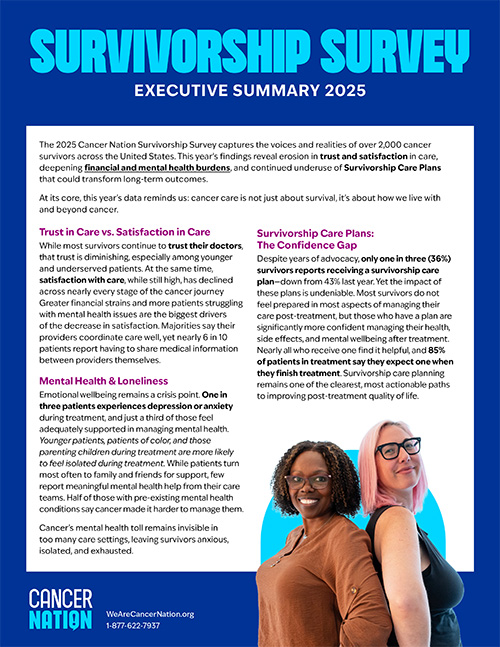
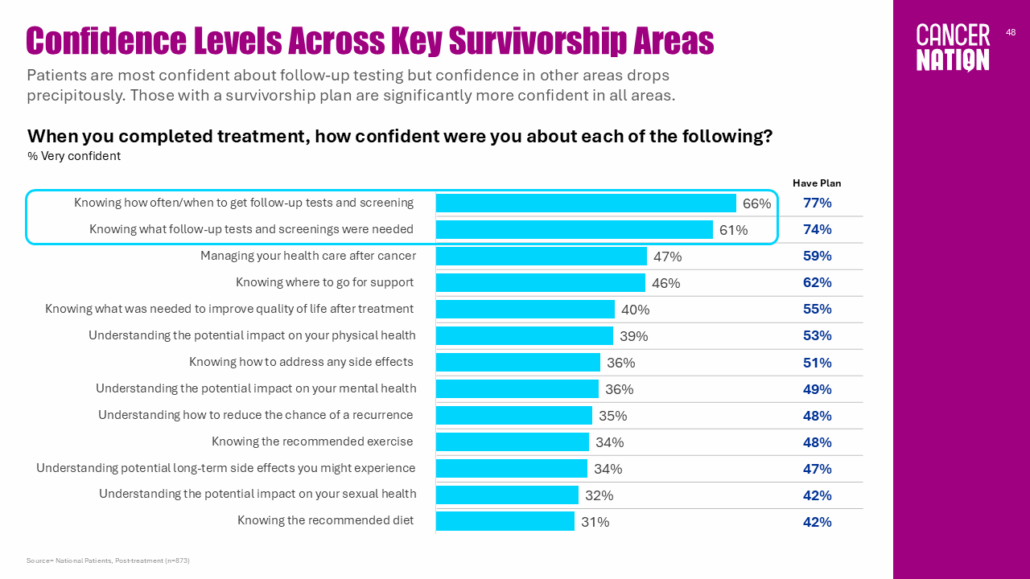
 The 2025 Cancer Nation Survivorship Survey captures the voices and realities of more than 2,000 cancer survivors across the United States. This year’s findings reveal erosion in trust and satisfaction in care, deepening financial and mental health burdens, and continued underuse of Survivorship Care Plans that could transform long-term outcomes.
New This Year:
At its core, this year’s data reminds us: cancer care is not just about survival, it’s about how we live with and beyond cancer.
Cancer Nation hosted a web briefing on November 12 to present the 2025 survey findings. Cancer Nation CEO Shelley Fuld Nasso and Edge Research Senior Research Analyst Liana Gainsboro took a deep dive into the results in detail and answered questions from an audience of survivors, health care professionals, researchers, and more.
Briefing Topics
00:00 Intro, Survey Objectives
03:12 Methodology & Who Responded
05:35 Treatment Decision-Making
09:20 Second Opinions
10:35 Patient Trust in Information & Research
13:22 Clinical Trials
15:47 Care Experience, Patient Satisfaction
19:36 Side Effects, Care Team Trust
22:00 Cancer Treatment and AI
25:13 Cancer & Chronic Conditions
26:50 Patient Emotional Health & Support
28:08 Emotional Support
29:27 Employer Support
30:50 Post-Treatment Care Experiences
34:12 Survivorship Care Plans
38:06 Financial Impacts
40:04 Insurance Challenges
41:40 Medicare Prescription Payment Plan
42:52 Key Takeaways
47:38 Q&A from Audience
The briefing recording can also be watched on YouTube.
The detailed findings slide deck of the 2025 survey data contains more data than is featured in the briefing. Download the Detailed Findings here »
 While most survivors continue to trust their doctors, that trust is diminishing, especially among younger and underserved patients.
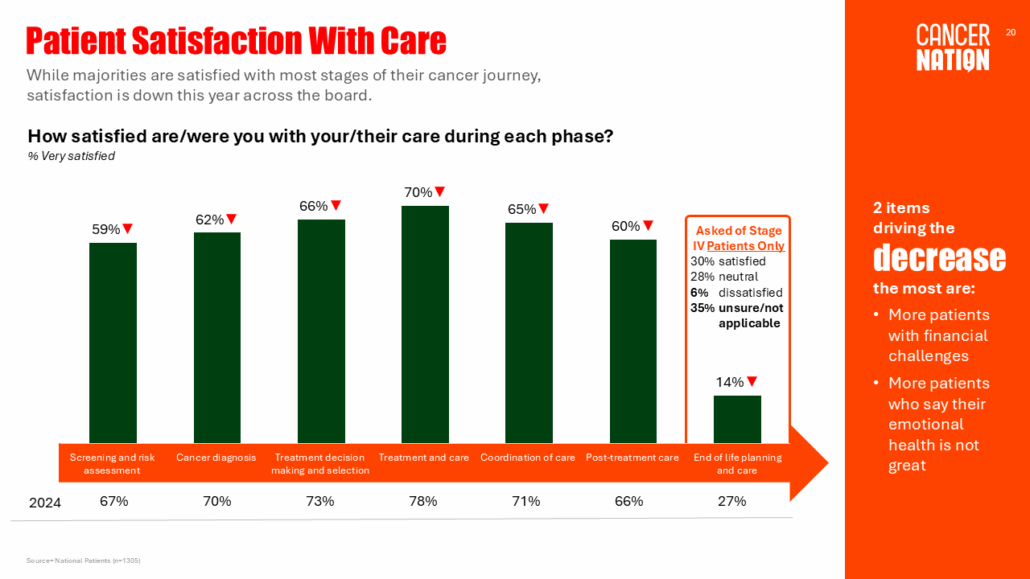
At the same time, satisfaction with care, while still high, has declined across nearly every stage of the cancer journey. Greater financial strains and more patients struggling with mental health issues are the biggest drivers of the decrease in satisfaction. Majorities say their providers coordinate care well, yet nearly 6 in 10 patients report having to share medical information between providers themselves.
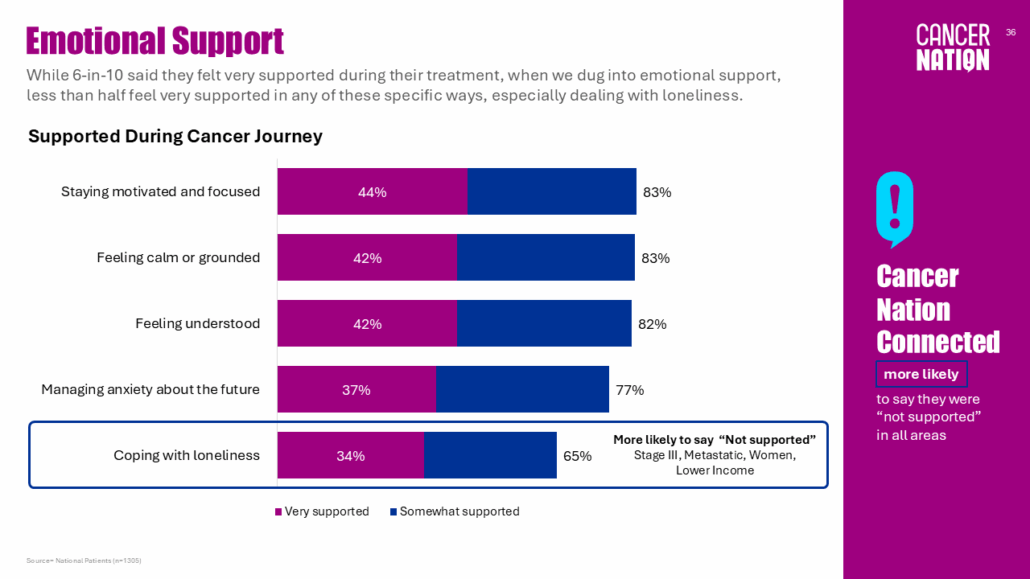
Emotional wellbeing remains a crisis point. One in three patients experiences depression or anxiety during treatment, and just a third of those feel adequately supported in managing mental health. Younger patients, patients of color, and those parenting children during treatment are more likely to feel isolated during treatment. While patients turn most often to family and friends for support, few report meaningful mental health help from their care teams. Half of those with pre-existing mental health conditions say cancer made it harder to manage them.
Cancer’s mental health toll remains invisible in too many care settings, leaving survivors anxious, isolated, and exhausted.
 Survivors overwhelmingly believe cancer research benefits them (9 in 10). At the same time, more than half also believe research is influenced by politics. This skepticism underscores a growing crisis of trust—not in science itself, but in the systems that fund and communicate it. While faith in innovation remains high, survivors’ faith in fairness is fading. This is an urgent call for transparency, accessibility, and survivor-centered research communication.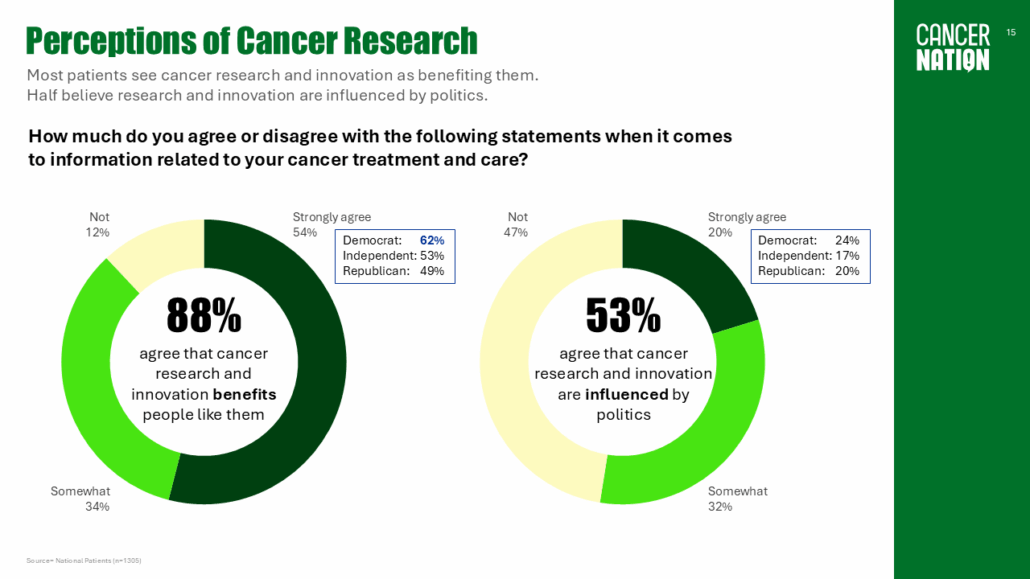
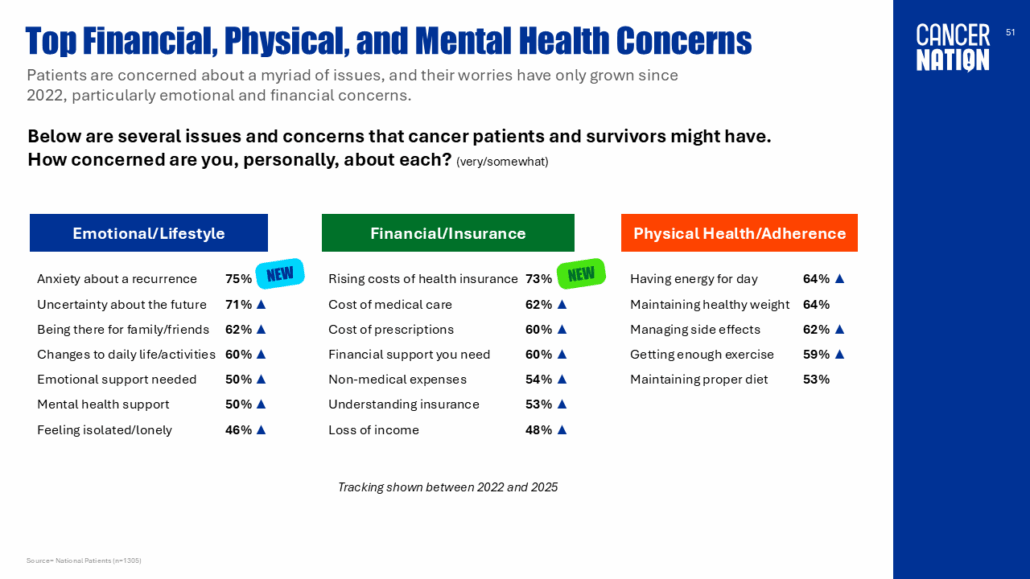
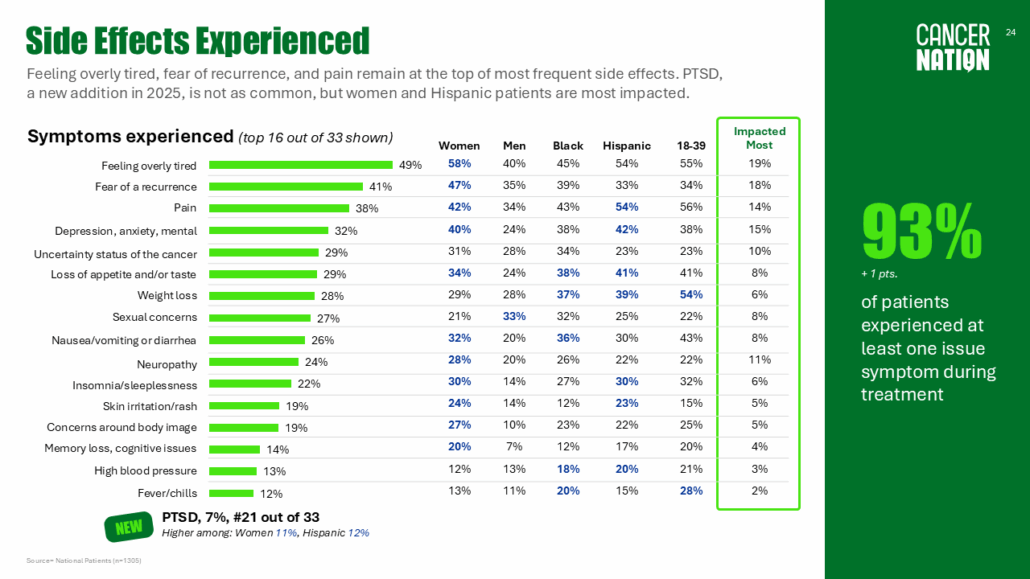
Whole person cancer care demands attention to the long shadow side effects cast.
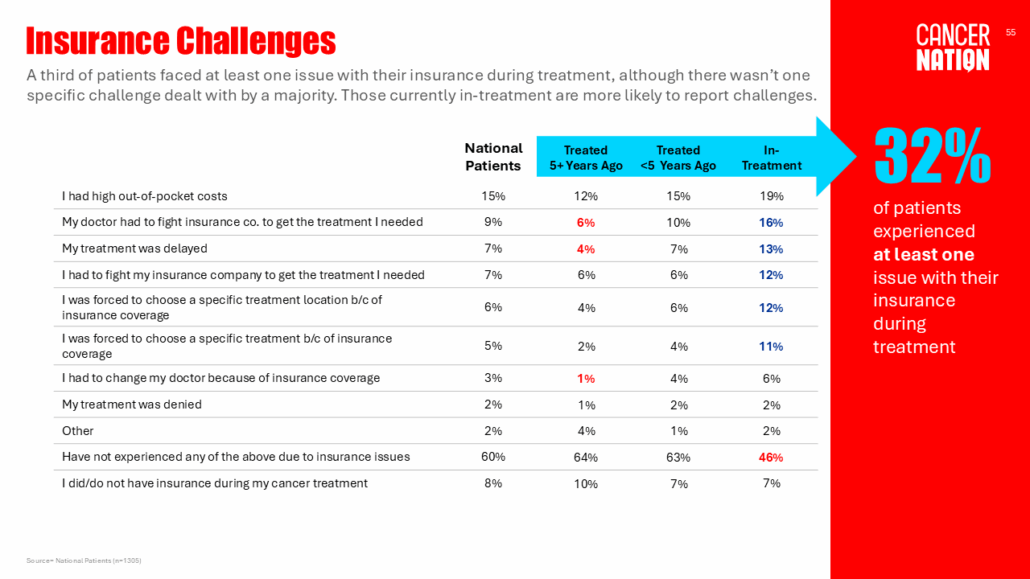
Cancer care must never depend on the fine print of an insurance policy.
 Across every theme — trust, mental health, survivorship, finances, and side effects — the message is clear: survivors are surviving, but too many are not thriving.
This year’s findings reaffirm why we exist: We need a Cure for Care — care that sees, treats, and covers the whole person, not just the cancer.
We are Cancer Nation. And we are here to be heard.
The 2025 Cancer Nation Survivorship Survey detailed findings presentation deck contains much more information, including data on additional topics and more detailed tables and charts.
Download the Detailed Findings (PDF) »
Download this Executive Summary (PDF) »


Cancer Nation is the voice of America’s 18 million cancer survivors: those living with, through and beyond cancer.
Cancer is a journey we travel for life, and how well we live that life depends on the care we get and the policies that shape it.
We are uniting to demand cancer care that not only helps us survive, but thrive.
Cancer Nation is the voice of America’s 18 million cancer survivors: those living with, through and beyond cancer.
Cancer is a journey we travel for life, and how well we live that life depends on the care we get and the policies that shape it.
We are uniting to demand cancer care that not only helps us survive, but thrive.
Be the first to hear about cancer policy and survivorship issues! Subscribe and receive the twice-monthly Cancer Nation News, invites to webinars and events, and more.



Founder
Northeast Regional Cancer Institute
“Perhaps one of the most impactful collaborations in Dr. Brereton’s extraordinary career remains his early work and long friendship with Ellen Stovall. Through him, and in turn through the thousands of lives he has touched, Ellen’s work continues, and her mission lives on.”
—Karen M. Saunders
President, Northeast Regional Cancer Institute